Friday, February 20, 2026
8 C
Laval
spot_img
Home Blog Page 137

Laval reports positive economic results, in spite of COVID-19 pandemic

Despite a less than ideal economic climate due largely to the COVID-19 pandemic, the City of Laval managed to finish the 2020 fiscal year with signs of future growth and promising results, according to figures released last week by city officials.

In its 2020 report of economic results, the City of Laval says the region outperformed all other municipalities in the greater Montreal area with the lowest recorded negative economic growth at – 4.1 per cent (according to Desjardins), with an economic upsurge of +10 per cent forecast until the end of 2021 (which is higher than the average for all of Quebec).

While negative growth is considered anathema in normal economic times, the pandemic has turned it into an everyday factor that many governments and corporations are taking for granted these days.

According to the city, the impact of the pandemic has been in Laval primarily in the sectors of tourism and retail commerce.

Some sectors prospered

However, Laval has also benefited from the fact that other sectors, such as high-technology and the bio-sciences, have been able to seize on opportunities created by the pandemic for the products and services they provide.

“Laval’s performance indicates to us that we are well-positioned to regain our momentum despite the difficult economic environment,” said Mayor Marc Demers. “I would like to recognize the entrepreneurs and businesses from Laval for their capacity to adapt and their energy.

“It’s mostly thanks to them if Laval has come out of this so well,” Demers added. “I would also like to point out the collective effort involved: All together, we are taking the means to meet challenges brought on by COVID-19 in order to establish solid bases on which we will regain our momentum for the years ahead.”

A positive outlook

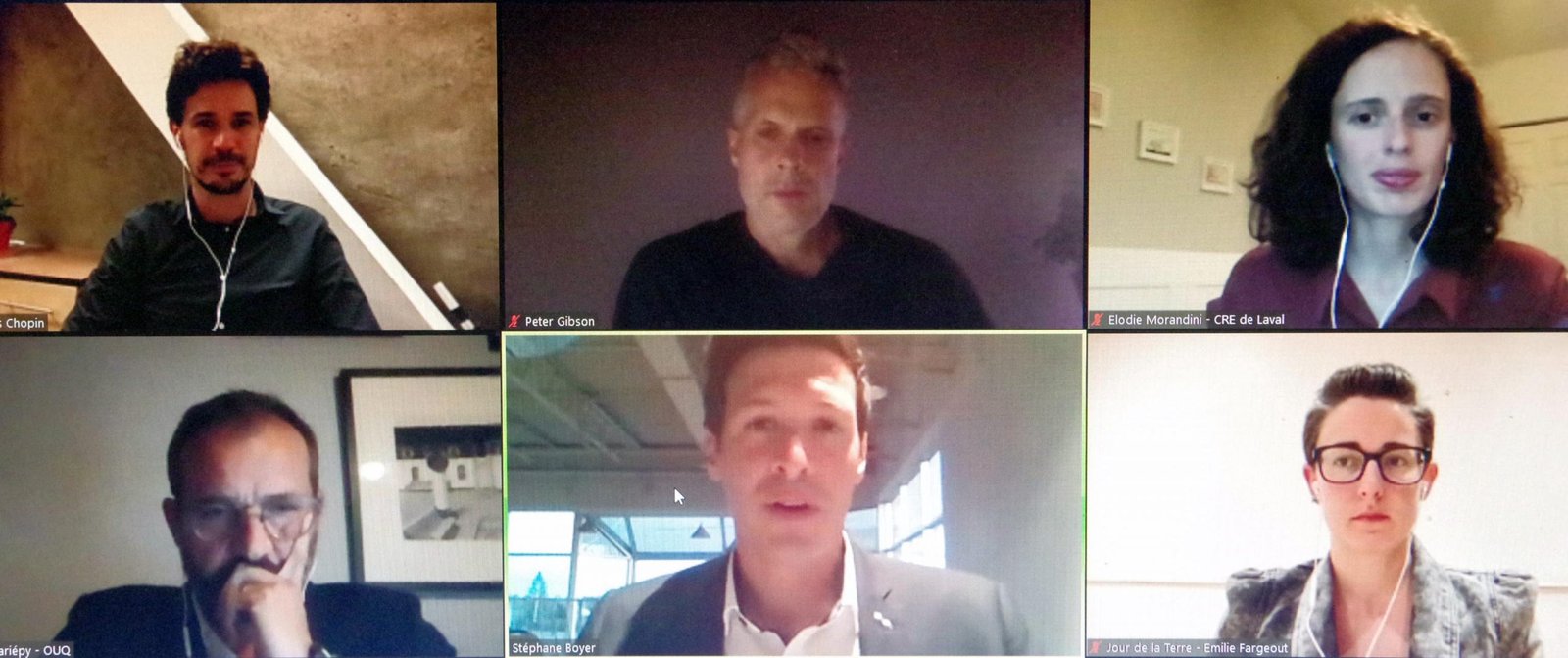
Deputy Mayor Stéphane Boyer, who is vice-president of the executive-committee and oversees economic dossiers, has also been feeling optimistic lately about the City of Laval’s prospects for growth in the years ahead.

“We have all been affected, as we survey the impact of the pandemic on our businesses here in Laval,” he said. “Nonetheless, we have also been fortunate to see how, through incredible will and the mobilization of all the economic partners, our businesses were able to collaborate in order to get things done.

In an annual report on the city’s economic state, Laval mayor Marc Demers says the city has managed well since last year, in spite of the COVID-19 pandemic.

“This solidarity by our businesses, with help provided by the city and higher governments, became a force against the difficulties that the business community as a whole was able to confront,” added Boyer.

According to Desjardins’ economic evaluation of Laval for 2021, the city will be seeing an economic rebound during the coming year. Here are some highlights from the 2020 report:

Employment

Laval had an unemployment rate of 8.2 per cent in 2020, which is substantially lower than metropolitan Montreal (10.1 per cent) and the province of Quebec (8.9 per cent).

Real Estate

Through various economic sectors in Laval, the value of new residential and non-residential real estate investments totaled $857.7 million, for a drop of 18.6 per cent, according to the city. The city says these numbers were negatively affected by a 36. 2 per cent drop in industrial and institutional real estate investments.

The city says the number of residential housing starts grew by 68.3 per cent compared by 2019 to reach 2,851 units, a peak since 2009.

Support for business

Since the beginning of the pandemic, the city says it has put into place various emergency measures to support businesses, including deferring property tax payments, COVID-19 business loans, and a moratorium on repaying loans.

Covid and Cité de la Biotech

The city says that since the beginning of the COVID-19 pandemic, more than a dozen businesses in Laval involved in bio-tech and bio-sciences have been actively involved in efforts to fight COVID-19.

Whether it was research for finding new vaccines, medications, diagnostic tests or decontamination technology, the expertise of these businesses proved to be indispensable and put Laval on the global stage.

The city is currently planning a major expansion of the Cité de la Biotech to further encourage this success.

Laval gets a pass from Auditor General – despite noted shortcomings

City still needs to improve its snow removal strategy, says Véronique Boily

In her fifth annual report presented to city council last week, Laval Auditor General Véronique Boily acknowledged that the Demers administration could do more to improve its financial statements, as well as its compliance with legal and regulatory requirements, but that overall the administration gets a passing grade.

“This fifth report produced since I took office highlights common issues that emerge from the analysis of the various subjects audited this year,” said Boily, who summarized the report for journalists during a webcast press conference last week.

“This analysis can enable the city to go beyond the isolated treatment of the findings and recommendations presented in each of the performance audits and improve certain key aspects of its management,” she said. The report includes four performance audits which resulted in recommendations from Boily’s office.

Snow removal

Boily notes that in October 2015, the City of Laval adopted a new snow removal strategy to help guide its snow removal operations. Despite the fact the strategy sets clear priorities and deadlines for situations considered normal, “the strategy is incomplete,” she concluded.

Referring to “recurrent under-estimation” by the administration, she said the budget allocated to snow removal “is not based on real needs and does not constitute a tool for controlling expenditure as it should.” She said the city has developed several useful and relevant performance indicators, except for abrasives spreading operations.

In addition, she said the city hasn’t developed a comprehensive management plan that includes measures to improve the efficiency of the spreading activity and reduce costs, while contributing to a better environmental balance.

Information technology

Boily’s office also examined whether the city manages its information technology (IT) projects to ensure that they are completed successfully and efficiently. While admitting that the project management framework follows accepted approaches, she said it isn’t supported by a methodology.

She said the content of deliverables, as well as the roles and responsibilities of the stakeholders, are missing from the city’s strategy. “This opens the management framework to interpretation regarding how documents are completed and the presentation of relevant project information,” said Boily.

In addition, she said the cost estimate of IT projects was absent or incomplete for projects audited by the Office of the Auditor General because the cost of internal resources, among other things, was not included. “The risk analysis register is well designed, but not always used,” she said.

Finally, she observed that authorizations to move from one phase to another for IT projects is supposed to be granted by the governance committee. “But since this committee does not exist, these steps have not been subject to a request for authorization,” she added.

Monitoring of infrastructure

Boily noted that a significant portion of the City of Laval’s annual budget is allotted for the maintenance, improvement and development of infrastructure. She said management information for monitoring infrastructure work in the engineering department “is difficult to produce and insufficient to allow department managers to exercise proper governance.”

The report includes four performance audits, resulting in recommendations from Boily’s office

As well, she said some contracts were not reported to the executive-committee, as required by the contingency management and framework policy. Several non-compliances with contracts, the city’s monitoring guide and other internal forms were also identified by her.

Finally, Boily said the department has no documented analysis to support decisions on whether to carry out monitoring work internally or externally and has not assessed the risks associated with its reliance on external firms.

Pesticide, fertilizer and invasive species

On a somewhat brighter note, Boily pointed out that in recent years, the city adopted policies, strategies and objectives potentially affecting pesticide and fertilizer use and invasive species management. She said her team confirmed that the city’s actions to manage invasive species and reduce risks associated with pesticide and fertilizer use “are effective and consistent with the principles of sustainable development.”

She said the City of Laval is complying with applicable laws and regulations regarding the use of pesticides and fertilizers. However, even though it has adopted several recommended practices to reduce the impact on health and the environment, “it still has some progress to make in certain areas,” Boily concluded.

In the meantime, she added that the city is taking numerous actions to control the spread of invasive species such as ragweed. “However, these actions are not part of a structured, multi-year control plan,” said Boily.

Boily’s overall observations Overall, she said that to a greater or lesser extent, all the audits carried out this year by the Laval Auditor General’s Office “reveal a lack of control to ensure compliance with the frameworks in force. A lack of operational guidelines or instructions was observed in some audits. This deficiency is affecting the uniformity of practices in the various sectors of activity.”

2020 review: reduction in the number of fires

A year of challenges for the Fire Department

Laval, August 12, 2021 — On August 11, the Service de sécurité incendie de Laval filed a report on its 2020 activities, in which there was a 19% decrease in calls and, above all, a 14% decrease in fires. These findings show that despite the pandemic that began in March 2020, the constant efforts and creativity of practices to ensure services to citizens while prioritizing the safety of staff in the field have borne fruit.
“The people of Laval can be proud of their Fire Safety Department. The year covered by this report was one of challenges for firefighters and management. This report demonstrates that the mission of prevention is fulfilled thanks to the imagination and creativity of the head of division and her team. In terms of interventions, the field teams have improved response times, and we can only congratulate them on that. Once again, congratulations to all the staff of the service and management for their outstanding work. »

— Sandra Desmeules, member of the executive committee, responsible for public safety issues and municipal councillor
“The year 2020 will be marked forever in our memories, with the additional challenges caused by the COVID-19 pandemic. Despite these, all of the fire department’s resources have maintained at a high level our mission to protect the lives and property of the population as well as the City’s infrastructure. »
— Patrick Taillefer, Director of the Fire Department
Prevention: a priority
The year 2020 was marked by the temporary cessation of on-site inspections. From March to September, the Prevention Division team chose to modify its practices in order to carry out the follow-ups required to ensure the safety of citizens. It was therefore by making telephone calls that the re-inspections were carried out. Awareness-raising and education work with daycares, schools and seniors’ residences, among others, has continued with some technological transformations to reach all audiences. Since September, inspectors have resumed face-to-face visits, while respecting public health guidelines.
Strike force never known to date
The strike force consists of 10 firefighters arriving in 10 minutes at the scene of a medium- and low-risk building fire (within the urban perimeter), with an additional 5 firefighters within the next 5 minutes for high- and very high-risk buildings (within the urban perimeter). In 2020, 96% of the response time was obtained, which is a significant overshoot of the initial target: in the revised fire risk coverage scheme, it was 90%.
Interventions of all kinds
In addition to fighting the flames, firefighters responded to a multitude of other situations, including:
• Cardiopulmonary resuscitation;
• Dumping of hazardous materials;
• Road accident and release from custody;
• Flooding;
• Ice rescue and nautical rescue;
• Gas leakage;
• Civil protection disaster.

Some highlights
• 1,321 fewer calls than in 2019, for a total of 5,752 calls.
• 38 fewer building fires than in 2019, a decrease of 14%.
•490 fewer responses for unfounded alarms, a decrease of 20%.
Between1 May and 31 October, firefighters carried out 14,400 home prevention visits to residences in Laval; this represents approximately 400 addresses per team (group or fire station). This prevention work has made it possible to achieve 99% of the initial objective of the revised fire risk coverage scheme 2015-2019.

Laval’s life insurance bill rises to $191.5 million for five years coverage

New Desjardins contract is 133 per cent higher and most costly ever, says opposition

The City of Laval will be paying Quebec financial services giant Desjardins more than $191 million for employee life insurance coverage over the next five years, in what the official opposition at city hall claims is the largest contract in the municipality’s 56-year history.
The agreement was one of number of expenditures approved by the members of Laval city council during their webcast monthly meeting on Aug. 10.
Cost between city/employees
The Desjardins contract might have gone unnoticed, as do many routine expenditures during council meetings. However, Parti Laval city councillor for Fabre Claude Larochelle singled out the agreement, which amounts to exactly $191,549,842.
While the sum, even when spread out over five years, may seem somewhat staggering – the City of Laval’s total budget for 2021 is $932 million – it’s worth noting that the city itself will be paying only 60 per cent, with the remaining 40 per cent coming from deductions taken from employee salaries.
A 133 per cent increase
However, according to Larochelle, the new contract will raise Laval’s bill for premiums paid on employee life insurance by 133 per cent over the coming five years. “Maybe it’s the best deal, but we didn’t go to public tender, so we don’t know exactly,” he said.
“And it would have shown a little respect to the elected officials to get together a presentation for the biggest contract in the history of the city, and to explain it to the elected officials. Because it’s our residents who are going to be paying for this.
“The tenant on Cartier Blvd. who’s earning $16 an hour and has no group insurance will be paying the $191 million,” added Larochelle. “So, I think we would have deserved to receive some good explanations, which was not the case.”
Position on climate change
With an extremely pessimistic report on global climate change issued the day before the council meeting by the United Nations, Mayor Marc Demers read out a statement at the opening of the meeting in which he outlined the City of Laval’s efforts in recent years to combat environmental warming.
“In the most optimistic scenario, where we would succeed in curtailing greenhouse gas emissions quickly and drastically, the experts are predicting a climate warming by around 1.5 degrees Celsius between now and 2030,” he said, noting that this shortens the window of time since the last assessment by around 10 years.
Action needed, said Demers
“It is clear that among those of us who govern, we are confronted by an urgent need to act and to take even more action than we have until now.”
Among the efforts Demers said the City of Laval has undertaken to do its part to help are a range of subsidies to help pay for electric cars and bicycles, to convert oil-fired furnaces to electric, and a program to recycle old refrigerators containing environmentally-hazardous coolants.
“All these things are steps forward for a greener world,” added the mayor. “We have done a lot, but in light of this latest report, you will understand that I am strongly encouraging those who will follow us on council to do more. We are all responsible to future generations.”
St-Elzéar wetlands threatened
During the public question period, several residents of the Saint-Elzéar Ouest neighbourhood between Curé Labelle and Chomedey boulevards noted that there are number of wetlands in the area, although they maintained the city is doing little to protect them environmentally.
Pointing out that on a recent day in August several residents caught some individuals using equipment in an elaborate attempt to drain one of the wetlands known as the Oasis Bergerac, they asked what sort of commitment city officials would be willing to make to establish better safeguards.
More condos than trees
Vimont city councillor Michel Poissant, who is running for mayor under the banner of his Laval Citoyens party, referred to the Bergerac sector as an “immense heat island” where “there are more cars and condos than there are trees. The wetlands there are important because they are located at the heart of an ensemble of condos.”
While suggesting that Laval appears to still be actively encouraging the development of heat islands by allowing so many condo projects to proceed, he said the city would be better off buying up wooded lands, perhaps with the help of the Quebec environment ministry, and developing more green spaces.
Protection needed, says Boyer
Although the City of Laval owns some of the wetlands in question and others are protected by environmental decrees, Deputy Mayor Stéphane Boyer acknowledged that most are not protected from being drained by private owners.
“We’ll see if there is something we can do to strengthen the protection regulations,” said Boyer, adding that the city began to look at the possibility in recent weeks of buying up private tracts of wetland “because this is in fact a very beautiful area which must be protected.”

Laval mayor Marc Demers speaks during last week’s city council meeting. (Screenshot: Newsfirst Multimedia)

Laval News Volume 29-27

0

The current issue of the Laval News volume 29-27 published August 18th, 2021.
Covering Laval local news, politics, sports and our new section Mature Life.
(Click on the image to read the paper.)

Front page of the Laval News.
https://lavalnews.ca/wp-content/uploads/2021/08/TLN-29-27-WEB.pdfFront page of the Laval News, August 18th, 2021 issue.

Federal prison guards concerned about smuggling and drones

Smuggling of contraband such as drugs and cell phones by aerially-borne drones into federally-administered prisons on Laval’s territory is of growing concern to the union representing guards who oversee prisoners at the penal institutions.

According to the Union of Canadian Correctional Officers (UCCO-SACC–CSN), drones were used in the majority of the 41 documented seizures from detainees at the two federal prisons located in Laval’s Saint-Vincent-de-Paul district.

The union speculates that the with the curfews and restrictions that were in place earlier this year to deal with the COVID-19 pandemic, the use of drones to clandestinely fly contraband onto prison grounds grew.

The union says that over a period of five months, correctional services officers made 11 seizures of contraband alcohol, three involving firearms, five for drugs, 11 for unauthorized medications, and 10 for illicit tobacco and cell phones (which are banned for prisoners).

The union maintains that the employer, the Correctional Service of Canada, has taken inadequate measures to control the unauthorized delivery of contraband packages into the penitentiaries in Laval. UCCO-SACC–CSN says CSC should install new radar systems designed to detect the presence of drones being flown near the prisons.

“These radars will facilitate more efficient detection of drones overflying the penitentiaries, which would be a step in the right direction,” Frédérick Lebeau, president of UCCO-SACC–CSN for the region of Quebec, said in a press release issued by the union.

However, the union maintains that CSC is only planning on implementing five radar units at a total of 49 federal penal establishments across Canada. The union says that in Quebec, the only radar system to be installed soon will be at Donnaconna Institution near Quebec City.

As well, the union claims that the radar systems will only be solving part of the problem – that being detection of incoming drones. “Once the drone has been detected, how are we to get our hands on the package before the detainees do?” Lebeau asked.

According to the UCCO-SACC–CSN, interception of contraband packages being smuggled in by drone will be essential. They also note that other measures being planned by the CSC include securing prison cell windows and possibly also installing roofs over some exterior areas, making them inaccessible to drones.

On top of these suggestions, UCCO-SACC–CSN says CSC needs to implement body scanners inside its prisons and penitentiaries to detect the presence of contraband when it has been smuggled past outside security by drones.

Laval Police seek missing 17-year-old girl

The Laval Police Department is hoping members of the public will help to locate a 17-year-old girl from Laval who has been missing since July 29.

The LPD is seeking help from the public to locate this missing 17-year-old girl.

According to a press release issued by the LPD on Aug. 2, Joelle Adam left her home on that date but hasn’t been seen since. Her family fear for her safety. It is believed she is still somewhere in the greater Montreal region.

Description:

  • Race: Caucasian and speaks French
  • She is 5’ 3” tall and weighs 140 lbs.
  • She has blonde hair and hazel eyes
  • She was last seen wearing a pink top, flowered slacks and beige running shoes made by FILA.

Anyone who believes they have information on the whereabouts of Joelle Adam can contact the Laval Police Department’s Info-Line at 450 662-INFO (4636), or call 911. The file number is LVL 210801-028.

Boating Safety

With the good weather forecast for the next few days, many boaters will be on the waterways. Your nautical patrol police call for caution, however, because our rivers have certain peculiarities, often unknown to boating enthusiasts. Let us think here of the narrow channels, the low or variable water level as well as the cold temperature in certain places.

The City of Laval is surrounded by 2 major bodies of water, namely the Rivière des Prairies and the Rivière des Mille Îles. Regardless of the waterway, boat operators who engage in nautical activities must show courtesy and above all, respect the articles and regulations taken from the Canada Shipping Act.

This means that you must know and follow the laws and rules that apply to your boat, as well as water in which you navigate. It is also suggested to use the Safe Boating Guide Canada as a starting point for safe navigation.

The Criminal Code of Canada also applies to boating. The following are considered criminal acts:

• Driving / guarding and controlling a boat with impaired abilities by alcohol and / or drugs

• Do not stop at the scene of an accident

• Operating a boat that is not seaworthy Five takeaways:

• Wear your PFD or life jacket

• Do not drink alcohol while driving

• Take a navigation course

• Be prepared and the required equipment on your boat

• Beware of the dangers of cold water immersion.

City employees and retirees raised $109,943.08 for the Red Cross

Even though for a second consecutive year the the Red Cross corporate
campaign was done virtually, the employees and retirees of the City of Laval raised $109,943.08.

It is well known that in Quebec, the Red
Cross intervenes on average three times a day as part of an emergency response, for example during a flood or fire.

It provides affected families with comfort, shelter, food aid, clothing and essential items.

The donations received make it possible, among other things, to offer this service 24 hours a day, 365 days a year.

The pandemic has highlighted the fragility of the most vulnerable citizens, hence the urgent need for generosity.

City employees and retirees responded to this call by participating in large
numbers in the campaign.

New LPD police station will serve City of Laval’s western sectors

Mayor Demers and police chief Brochet help get construction underway

On August 5, construction work began on a new Laval Police station on Curé Labelle Blvd. in Saint Martin, with Mayor Marc Demers, Councillor Sandra Desmeules, police chief Pierre Brochet and others starting things off by helping turn the first shovels of earth.

Fall 2023 opening

Located at 2455 Curé Labelle near the Adonis supermarket, the new building will house the LPD’s western Laval police detachment, as well as a police operations centre. The building is scheduled to open in the fall of 2023.

According to the LPD, the services housed in the building will help improve response times to emergency calls while boosting the presence of police in surrounding neighbourhoods. Some of the latest police technology will be installed in the new police station, contributing to the modernization of Laval’s security and police operations.

Improving services

“The western police station is part of a brand-new approach to public security services to be implemented between now and 2023,” said Mayor Marc Demers.

“This new outlook aims towards improving intervention capacity, towards optimizing operational efficiency, while also improving proximity with the residents. So, the security of citizens, which is Laval’s priority, will not only be assured, but will be even better.”

‘The western police station is part of a brand-new approach to public security services to be implemented between now and 2023,’ said Mayor Marc Demers

“The creation of this new police station in the west of the city will offer more proximity in order to take on the evolving reality of the territory, while continuing to assure the security of the citizens of Laval,” said police chief Brochet.

An important milestone

“We are very excited about the idea of crossing this important milestone for our new service offer in public security,” he added.

According to the city, the police station building is being erected with a goal of achieving LEED Gold environmental certification for environmental values.

The construction and certification process are being handled by Laval-based Groupe Geyser which specializes in projects such as this.

The contract for the project was awarded by Laval city council in July following a call for tenders.

Alouettes linebacker Brian Harelimana learned to love football in Laval

0

The 25-year-old played for the Chomedey Blues and Les Loups Curé-Antoine-Labelle

Although Canadian professional football lost one half of a promising duo of siblings when Kean Harelimana retired from the sport after failing to qualify for the 2021 roster of the CFL’s Ottawa Redblacks, his brother Brian will be carrying forth the torch.
Football runs in the Harelimana family. Originally from the African nation of Rwanda, they became residents of Laval’s Chomedey district around 2004 when the two were grade schoolers after living for a time on Montreal’s West Island.
Brian carries the torch
While the younger Kean Harelimana played lineback for the University of Laval’s Rouge et Or before being drafted earlier this year, he was released from the Ottawa Redblacks roster in late July. According to the Journal de Québec last week, Kean believes his best years are behind him and he has formally retired from the sport.
Brian Harelimana (who also plays lineback) is the more fortunate of the two. The 6’ 2”, 228-lb., 25-year-old was selected earlier this year by the league’s Montreal Alouettes after four seasons with the Carabins at the University of Montreal. There he ranked second on the roster in 2019 with 37 tackles and eight knockdowns.
Laval a football town
During an interview with the Laval News, Brian Harelimana acknowledged that Laval is a real football town, where the sport is played and appreciated by a large base of fans. It was in Laval and in Chomedey where his love of football really started to take off.
“When I first moved from the West Island and came to Laval and started playing football here, there were some good players who went through the Chomedey Blues program,” he said, referring to the storied local football club which has been the breeding ground for a good amount of professional football talent.
Although Brian had started playing football on the West Island, he played for two years (2008-2009) for the Chomedey Blues, following which he joined the high school football team (Les Loups) at École secondaire Curé-Antoine-Labelle in Laval.
Fell in love with football
He recalled the first time he felt a strong emotional connection with the sport. “From the moment I first stepped onto a football field, I fell in love with football,” said Harelimana. “But I would say that when I really decided that football was something I wanted to do with my life was when I got to high school.
“When I got to École secondaire Curé-Antoine-Labelle, it was a powerhouse team at that point and it still is. I was picked up by Les Loups and I wanted to be the best player on the team. And I was surrounded by great coaches who taught me a lot about discipline and work ethics. And ever since I got into that program, I knew football was something I wanted to do with my life.”
Failure and success
Brian is a firm believer in the age-old truth that you learn more from failure than you do from success. Having played on teams that often fell just short of winning a championship, he said he experienced disappointment first-hand.
“In these programs there are a lot of expectations and you want to win a championship with them,” he said. “You know what, for some reason I never had a chance to win a championship for any of these teams. These are things that, at the end of the day as a competitor, you want to end up with a championship, which is more important than anything else.
“But I haven’t had the chance to have that. So, you know what drives me to this day is that I have the chance to play in my hometown with the Alouettes. It would be something very special for me to be able to contribute and help my team get to the Grey Cup.”
A highly versatile player
Over the years culminating with his signing to the Alouettes, Brian Harelimana developed a reputation as a football player with versatility comparable to that of a multi-purpose Swiss Army Knife. Whether it’s pass rushing off the edge or dropping back to play in coverage, Brian is comfortable at all three levels. He explained how he ended up evolving in this direction.
“As I was growing and playing, the game changed,” he said. “At the same time, I came to realize that the more you can do on the field helps your team. So, I gradually added to my game. The more you can help out, the more you are useful to your team. It’s something I would even suggest younger players look into that can help out.”
A future NFL prospect?
Although Brian studied industrial relations in university as an alternate career to football, he feels inclined at this point to pursue the sport professionally, be it on the field or as a coach, trainer and consultant. In the meantime, there has been speculation that Brian Harelimana might be a prospect for NFL recruitment.
“I’m taking things a step at a time,” he said last week regarding this potential development. “Right now, we just finished training camp preparing for our first game. I don’t like to look too much ahead. I do what I have to do, and if I’m good enough, they’ll find me. That’s for sure.”

Special waste collection to support the transition to new habits

Ville de Laval organized a special manual waste collection at around 100 collection points in order to support adaptation to new practices.

This is in addition to the collections already scheduled normally. Thus, a large collection was carried out in the last days to ensure that targeted places in the city are free from the accumulation of abandoned residual materials.

This intervention was necessary to maintain the cleanliness of the streets and the quality of the citizens’ living environment.

In addition, several awareness officers who have crisscrossed the territory since last April will continue their work during the next collections in order to better support citizens in sorting residual materials and to explain the recovery solutions available in order to maximize the use of collection bins.

It should be noted that this very targeted operation, which concerns around a hundred collection points, consisted in the collection of tillers of waste abandoned on vacant lots at the end of dead end streets or left on the edge of the street, but also not in conformity with the regulations. usual collection services.

Every action counts!

In a context of labor shortages in the trucking and recyclable materials industry, the management of collections brings up specific issues for which the City must remain vigilant and show constant agility in order to ensure sanitation. of the territory. Last April, nearly 123,000  black bins serving 130,000 doors were distributed across the region. This operation for the citizens living in buildings of 7 units or less has completed the automated collection service 3-way ( brown bin , blue bin , black bin ). However, the new habits required by 3-way collection still require adjustments from citizens. It is also important to emphasize that in addition to the three-way collection, other recovery and recovery solutions are possible. In March of this year, the City adopted its  Laval Residual Materials Management Strategy 2020-2025 with a desire to put in place the right conditions in order to move towards “zero waste” by 2035.

Ways to dispose of residual materials

With the new 3-way automated collection, citizens now have access to several ways of disposing of their residual materials. Waste  Black bin collected once a week, for buildings with 7 units or less. Black bin and other containers picked up once or twice a week, for buildings with 8 units or more and businesses. Recycling Blue bin collected once a week. Compost Brown bin picked up once a week from April to November and every 2 weeks in the winter season, for buildings with 7 units or less.

Implementation of collection in progress, for buildings with 8 or more housing units.

2 reception areas for dry materials

Free for a volume of 12 m 3 per address, per year.

Bulky items collection

For buildings with 7 units or less, the bulky items collection takes place the last full week of each month, one working day before the garbage collection. For citizens whose blue bin and black bin collections are on Monday, the bulky items collection is the following Friday. Exceptionally, in 2021, 6 additional collections are offered.

Old refrigeration equipment

Home collection on call.

Collections of fallen leaves and Christmas trees

The collection of dead leaves is done through the collection of organic materials. The collection  of Christmas trees is done the same day as the collection of recyclable materials.

Mobile ecocentre

Next: September 18, 2021.

Report delays to 311

If citizens notice delays in their collections, they are asked to leave their bins at the curb and wait 2 days before calling 311 to report it.

Weather

Laval
overcast clouds
-3.9 ° C
-2.6 °
-4.9 °
68 %
8.8kmh
100 %
Fri
-3 °
Sat
-6 °
Sun
-1 °
Mon
-3 °
Tue
-8 °