Home Blog Page 134

City unveils plan to combat poverty in some neighbourhoods

The City of Laval has decided to take some innovative action to help combat poverty and economic problems in certain neighbourhoods on its territory.

A new policy position document was adopted by city council during its Nov. 5 meeting. Despite Laval’s overall high standing in Quebec as one of the province’s wealthier cities, the city says that one person in 10 lives below the poverty line.

The new policy will allow the city to plan and intervene in this regard more efficiently in order to revitalize neighbourhoods that are more affected by poverty, with an action plan containing more detailed procedures expected to be tabled sometime in 2022.

An important element of the plan, known as “Integrated Urban Revitalization,” will see action taken at the local level, with citizen participation encouraged. Some of the types of intervention the city will be making are as follows:

  • Bring municipal services, local residents and others together;
  • Identify priorities for actions to be taken;
  • Improve local infrastructure so that old can be remade into new;
  • Take actions to deal with “heat islands”;
  • Plan public spaces with quality and security as priorities;
  • Revive commercial streets.

Laval Fire Department tables 2021-2025 fire risk plan

During the Oct. 5 city council meeting, a fire risk plan submitted by the Laval Fire Department was tabled. The wide-ranging plan, the third such exercise in the application of strategic fire prevention, includes 54 actions to be taken over the next five years at a cost of $46 million. It comes into effect on Dec. 24.

“It is with the goal of always improving the protection of our citizens that this analysis of risks is undertaken every five years since the year 2000,” said Mayor Marc Demers, noting that the fire risk strategy is a requirement under provincial law.

“For the municipal administration, the fire risk plan is an important management tool to evaluate the needs of the population, while establishing well-documented recommendations for the improvement of the safety of all Laval residents.”

“For the Laval Fire Department and those who are responsible for rescue operations, the plan is a valuable planning took,” said Fire Chief Patrick Taillefer. “It allows us to analyze current risks on the city’s territory and takes into account prevention and intervention measures in order to reduce the probabilities for fires as well as human and material losses.”

Among the 54 measures in the new plan are the hiring of two new inspectors and 32 firefighters, the moving of Firehall No. 1 in Pont-Viau, and the reconstruction of Firehall No. 7 in Auteuil. As well, the fire department will be buying a new ladder truck for Auteuil and new pumper truck for Chomedey.

Some facts from the report:

From 2009 to 2019, there was an increase in the number of calls received by the fire department. This increase was attributed to the fact Laval’s population is steadily increasing, but also to a greater number of floods, wind storms and other weather-related calamities for which the fire department has to intervene.

Over the past 11 years, there was a significant decrease in the number of building fires. The report said this might be the result of greater emphasis on fire prevention and awareness-raising campaigns. On the more negative side, the number of buildings in Laval seven storeys or higher has increased greatly since 2013. These types of buildings are known to pose a higher fire risk in terms of evacuating people who live in them.

Laval city council meets one last time before Nov. 7 elections

Demers reviews work completed since first becoming mayor eight years ago

As the Laval city council meeting on Oct. 5 was the last council session of Mayor Marc Demers’s administration before the municipal elections on Nov. 7, he opened the webcast meeting with comments on the eight years he spent as Laval’s highest-ranking elected official.

To serve and protect

“It was a privilege for me to serve and protect the citizens of Laval for 38 years,” said Demers, who was a Laval Police Department officer and investigator before entering politics in 2013, and who is not seeking another term in office.

“During the last eight years as mayor of the City of Laval, we made a commitment to put an end to disorder in 2013, and to restore pride to the employees and cities of the City of Laval to be living in Laval and to be associated with Laval.

“I can say mission accomplished,” added the mayor. “We said clearly that we were going to fight against corruption and collusion, while recovering sums of money that had been stolen.

Fought corruption

“So, listen, we succeeded in recovering $50 million which was put back into service for the citizens of Laval from this collusion and corruption. That’s more than any other municipality in Quebec. And will be continuing negotiations and investigations to recover further sums of money.”

As regards integrity and transparency, Demers pointed out that the City of Laval was cited since 2013 by academics and experts in public administration as an outstanding example of good management among municipalities, to be emulated by other towns and cities.

He noted that under his administration, the Bureau d’intégrité et d’éthique de Laval (BIEL) was created to oversee governance and ethics issues, and that the City of Saint-Jérôme adopted the same model, while the City of Terrebonne joined Laval in a mutually-beneficial effort to seek improvements.

Other accomplishments

In addition, he said, the Secretariat for Governance was put in place to lend support to community organizations, and budgets were increased at the municipal ombudsman’s and the municipal auditor general’s offices, while their mandates were also expanded.

Laval mayor Marc Demers speaks during the last city council meeting, on Oct. 5, before the municipal elections taking place on Nov. 7.

It was also during Mayor Marc Demers’ two terms in office that funds were allotted to facilitate the webcasting of the City of Laval’s monthly council meetings live over the Internet. Past meetings are also available in an online archive.

All in all, the mayor maintained that his administration succeeded in raising the City of Laval’s credibility in the eyes of the federal and provincial governments, which paid off in the form of a greater number of subsidies and grants from Ottawa and Quebec than Laval had ever received before.

Thanks city employees

“That was based on the work we did, but also the work of our employees, the professional presentations that were submitted to the provincial and federal governments. This credibility was transformed into several advantages for our citizens.

“The economy of Laval is, according to economists at Mouvement Desjardins, the best economy and the best-positioned of all the administrative regions of Quebec. And the year 2022 will be, according to them, spectacular. This solid base gives us the best credit rating of all the cities in Quebec, which allows us to obtain advantageous interest rates on loans the city makes.”

With all these advantages, Demers claimed his administration was able to keep property taxes in Laval among the lowest of the 10 largest cities in Quebec and below the prevailing rate of inflation since 2013, going so far as to freeze taxes in 2020.

‘Mission accomplished’

“I am leaving to the next leaders a city of the 21st century, which is heading in the right direction,” Demers said finally, after listing several other of his administration’s accomplishments.

“I am very proud to say mission accomplished. We put an end to disorder. The City of Laval has a credibility as it didn’t have for several decades, and the citizens are at the root for most of the decisions and orientations that we take.”

‘I am leaving to the next leaders a city of the 21st century,’ said Mayor Marc Demers

During a segment of the meeting for tabling of residents’ petitions, Marc-Aurèle-Fortin city councillor (and official opposition leader) Michel Trottier deposited a petition signed by 650 people in disagreement with plans by the city to refurbish the Berge aux Quatre Vents riverside park in Laval-Ouest. According to Trottier, the signers are not concerned about the city’s plans to broaden access to the park, but rather the lack of public consultation.

Homage to Gilbert Dumas

Among the current city councillors not seeking a new mandate in the upcoming elections are Aram Elagoz (Renaud), Daniel Hébert (Marigot) and Virginie Dufour (Sainte-Rose). Both Dufour and Michel Trottier took time to pay homage to former city councillor for Marc-Aurèle-Fortin Gilbert Dumas, who passed away suddenly in 2019.

“He was a classy guy,” said Trottier, who won the seat in the by-election that took place to fill the seat after Dumas’ departure. “I miss him a lot,” said Dufour, while adding that Dumas provided her with advice and guidance when she first decided to enter municipal politics.

School Board election update

Some facts and figures from
the exercise in democracy
that returned Paolo Galati to
chairperson’s post

Contrary to popular belief prior to the election for chairperson of the Sir Wilfrid Laurier School Board that the turnout would be far more numerous than in previous elections because of the Bill 40 controversy, the numbers at final count were disappointing, and in the minds of Anglophone leaders. Not the best of news.

The turnout

The numbers that were reported by Returning Officer Clifford Buckland, at final tally showed that 1412 people turned out. On the September 26, 2021 election day when they cast ballots for ether incumbent Paolo Galati, or challenger Noémia De Lima. These 1412 taxpayers, who displaced themselves to show up to vote on either advanced polling day or election day itself represent 3.27% of the 43.131 registered eligible voters, leaving 96.3% at 41,721 as no-shows.

Laurier School Board showcases 2017-2018 budget overview
(File photo: Newsfirst Multimedia)

At final count, incumbent Galati received 1148 votes of the 1398 valid ballots cast, with De Lima picking up 250 in her favour. Mr. Galati’s support amounts to 82.1% support, with Mrs. De Lima’s share comes to 17.9%. Together, their vote totals represented 3.27% of all eligible voters.

Drop in numbers, but democracy served

A detailed analysis of the turnout level for the 2021 election reflects a lower voter-participation rate than in previous years. In comparison to past elections which attracted anywhere from 15 to 20% turnouts in the Laurier Board the 2021 turnout dropped by 500 to 700%.

As previously reported by TLN’s Martin C. Barry in a post-election report which went to press the day after the vote, the 2021 board elections across Québec were the first in a good number of years. In Laurier Board, voters were called upon to cast ballots only for the chairperson, as all board commissioners had been acclaimed in September 2020, with no challengers to their candidacies.

Following the election, Mr. Galati publicly congratulated Mrs. De Lima on her campaign, adding that “A variety of opinions have been voiced and democracy has been served. I am pleased that the electors of the Sir Wilfrid Laurier School Board have entrusted me with this second mandate and I am already back at work.”

In a post-election statement of her own, to TLN, Mrs. De Lima said she was not surprised by the outcome. “Nothing has changed. The Board has been like that for many years.”

Elections in other school boards

In points beyond the Sir Wilfrid Laurier School Board, throughout the nine English-language school boards 95% of all commissioners took their posts without having to go to the polls, earning acclamation prior to the voting day. At English Montreal School Board, the voter turnout for commissioner was at 9.8%; for Lester B. Pearson on West Island, 9.9%.

The Sir Wilfrid Laurier School Board describes itself as the third largest English school board of the Province of Québec. Its territory comprises the administrative regions of Laval, Lanaudière, and the Laurentides, spanning over 35 000 square kilometers.

CMA/CNA call for urgent action during emergency COVID-19 summit

Without health workers, there is no health care, say country’s doctors and nurses

With COVID-19 infection rates stabilizing in certain areas of Canada but still out of control in places like Alberta and Saskatchewan, what Canada needs is a “functional national vaccine passport or certificate,” the head of the country’s largest professional medical advocacy group recommended last week following an emergency summit on the Covid crisis.

‘Not complicated,’ said Smart

“You know, we’ve been talking about this for months,” said Dr. Katherine Smart, president of the Ottawa-based Canadian Medical Association. “It’s not complicated. It’s unclear why that solution is not yet available for Canadians to make public spaces safer.”

While there is currently no comprehensive and nation-wide vaccine passport program, all provinces and territories, including Quebec, have implemented vaccine passport or proof of vaccination systems on their own. Still, the CMA feels a more concerted effort would produce better results.

“We need to be reactive to situations as they evolve to make sure we’re increasing public health mitigation strategies in certain areas that aren’t doing well,” Dr. Smart said, noting the importance of keeping in place simple practices like masking to prevent Covid from spiralling out of control in some parts of the country.

Trying to see the light

The CMA held the webcast in conjunction with the Canadian Nurses Association (CNA) to emphasize that health workers across Canada, including Quebec, are now past the point of exhaustion and are in need of seeing some light at the end of the seemingly endless tunnel during the COVID-19 crisis.

Canada needs a “functional national vaccine passport or certificate,” Dr. Katherine Smart, president of the Canadian Medical Association, said following last week’s emergencyCOVID-19 summit.

As the two groups noted, rising numbers of COVID-19 cases have brought the health system in many regions to a breaking point. Despite encouraging words from government officials, they say vaccination rates are at a standstill and public health measures are being reinstated in some places.

In the meantime, they add, health workers are exhausted and demoralized, with many leaving the front line. At the same time, significant backlogs of surgeries are expected to affect the health system and quality of life of patients for years to come.

Workers at breaking point

“We can no longer ask our health workers to carry the load,” said Dr. Smart, who was joined by CNA president Tim Guest and Dr. Abdo Shabah, the CMA board member for Quebec.

“Throughout the summit we heard common concerns and themes being shared on how to immediately support health workers in this crisis,” said Guest. “It is clear, that we need a multi-pronged intervention, one that addresses the critical short-term challenges and one that also looks at beyond the COVID-19 crisis.

“While improved data collection and national health human resource frameworks are necessary, they do not fix the immediate issues,” he continued. “For our health system to make it through the fourth wave, governments and health organizations need to urgently work together to support our health workers. Without health workers, there is no health care.”

The battle’s not over yet

The summit brought together nearly 40 national and provincial health organizations, and included nurses, physicians, personal support workers, psychologists, educational institutions, and other health organizations.

Amid a growing fourth wave, they found, health care workers are burnt out, demoralized and exhausted as they care for patients. In addition, they noted that many Canadians are waiting for much-needed procedures that have been delayed due to increasing backlogs.

Short and long-term solutions

During the meeting, health care leaders identified both short-term and long-term actions to contain the fourth wave, lead an effective COVID-19 response and ensure Canada’s health system remains sustainable. These included taking decisive and urgent actions to address staff shortages across Canada, examining issues including recruitment, retention, workload and safety, and bringing immediate relief to workers in COVID-19 hot zones.

The suggested actions also included making immediate commitments at all levels of governments — municipal, provincial, territorial and federal — to avoid the collapse of the health systems at all costs. They suggested implementing stronger public health measures and empowering authorities such as school boards to intervene and protect the people they serve, while providing urgent and long-term mental health support for health workers who continue to work in dire conditions to care for patients and keep the health system afloat.

Mandatory vaxing announced

Whether by coincidence or not, the conference was held at exactly the same hour on Oct. 6 when Prime Minister Justin Trudeau and Finance Minister Chrystia Freeland were addressing Canadians on the COVID-19 situation and announcing the mandatory vaccination program for the federal workforce and federally regulated transportation sectors.

Under the new policy, federal public servants in the Core Public Administration, including members of the Royal Canadian Mounted Police, will be required to confirm their vaccination status by Oct. 29. Those who are unwilling to disclose their vaccination status or to be fully vaccinated will be placed on administrative leave without pay as early as Nov. 15.

While there is currently no nation-wide vaccine passport program, all provinces and territories have implemented vaccine passport or proof of vaccination systems

Travellers must also be vaxed

Employers in the federally regulated air, rail, and marine transportation sectors will have until Oct. 30 to establish vaccination policies that ensure employees are vaccinated. Effective Oct. 30, travellers departing from Canadian airports and travellers on VIA Rail and Rocky Mountaineer trains will be required to be fully vaccinated, with very limited exceptions. The government said it is working with industry and key partners to put a strict vaccine requirement in place for cruise ships before the resumption of the 2022 cruise season.

Laval News Volume 29-35

0

The current issue of the Laval News volume 29-35 published October 13th, 2021.
Covering Laval local news, politics, sports and our new section Mature Life.
(Click on the image to read the paper.)

Front page of the Laval News.
Front page of the Laval News, October 13th, 2021 issue.

Woman dead after being hit by car on Montée Montrougeau

A female pedestrian in her 50s walking along a bike path on Montée Montrougeau in Fabreville was struck and killed by a car Wednesday night around 6:30 pm after the vehicle veered out of control.

According to a police report, the car was going north on Montrougeau near Marian St. when, for a reason not yet completely understood, it ended up in the oncoming lane going against head-on traffic.

The vehicle then hit a street sign, following which it struck the pedestrian who was on the bike path at the time.

Police officers tried to revive the victim until paramedics arrived, although unsuccessfully. The victim was transported by Urgences Santé to hospital, where she was declared dead.

According to police, the driver, a woman in her late 40s who was not injured in the accident, is not believed to have been under the influence of alcohol or drugs.

They said the vehicle may have had a mechanical failure or the driver suffered a sudden medical crisis. The driver is not facing charges.

Accident investigators were on the scene following the accident, and the Laval Fire Department was called and issued alerts on Twitter about some possible power blackouts because the vehicle struck an electric power pole.

City and LPD lead safety campaign over the coming weeks

The City of Laval and the Laval Police are inviting motorists, pedestrians and cyclists to pay special attention while out using the sidewalks and streets, noting that a special safety campaign will be underway over the coming weeks.

According to the city, the LPD will be keeping an eye out for types of distracted behaviour that can lead to accidents, in order to help reduce the number of accidents and to encourage sharing of the roadways.

Each year, the LPD takes part in a province-wide operation to promote road security, which is conducted in conjunction with police forces across Quebec and the Société d’assurance automobile du Québec (SAAQ).

“Safety on the streets, on bicycle paths and on sidewalks is a constant preoccupation of the population,” says Mayor Marc Demers. It must depend on a clear sharing of responsibilities between motorists, cyclists and pedestrians. Therefore, the city invites users of the streets to cooperate and to show civic responsibility so that everyone can feel safe, but especially our little ones.”

The campaign has as its first objective to raise awareness among parents that they should adopt safe driving habits around schools and when they drop their children off there. During the campaign period, officers with the LPD will be out watching around schools very closely and will issue tickets to those found to have broken Highway Code rules.

A few facts regarding traffic calming measures implemented in recent years by the City of Laval:

  • In all, 157 sidewalks protrusions (121 in concrete, 36 painted) have been installed;
  • 81 interventions have been made at primary schools, at 27 pedestrian crossings and at 42 crossings with crossing guards;
  • The city closed two streets permanently;
  • with priority given to areas near parks;
  • As a result of citizen requests, 41 interventions for traffic calming were carried out.

Four arsons on Dagenais Blvd., including one at a Buddhist temple

Police in Laval are investigating four arsons that took place overnight on Sept. 29-29 on Dagenais Blvd. West, including one at a Buddhist temple that happened while clergy were there.

A fourth fire that police believe was intentionally set happened at 11:37 p.m. Sept. 28 at the Société bouddhique Laotienne at 3381 Dagenais Boul. West. The side door was burned as well as a chair that was outside the building.

Five monks were inside the temple when the perpetrator set fire to the door, according to one of the monks. He told media that he was concerned about the incident, but that unfortunately the security camera they had installed on the property stopped working. 

He said it was the first time an incident like this had happened and he wondered why their building was attacked. An LPD spokesperson said the perpetrators set fire to two dumpsters at two different addresses and burned a tire at a third location. All were in the same area of Dagenais Blvd. West and within a time-frame of about an hour, beginning at 10:24 p.m. Sept. 28.

Marie-Hélène Dubé is running for Action Laval in Sainte-Rose

Cancer survivor started campaign to get sick leave benefits extended

In yet another step towards completing their team before municipal elections take place on Nov. 7, Action Laval last week announced its candidate for the district of Sainte-Rose.

20-year friendship

Marie-Hélène Dubé and Action Laval mayoralty candidate Sophie Trottier have been friends for more than 20 years, Trottier said during an announcement to the media at AL campaign headquarters on Saint-Martin Blvd.

A resident of Laval for the past 27 years, Dubé is a mother to two children and has been a teacher of criminology at the CEGEP régional de Lanaudière for 14 years. She has a bachelor’s degree in criminology from University of Montreal.

Survived cancer

She is also a cancer survivor and has worked with the Quebec Cancer Foundation and the Canadian Cancer Society to raise awareness of the cause. She has received the Queen Elizabeth II Diamond Jubilee Medal in recognition of her contributions and volunteerism.

From the left, Action Laval city councillors Isabella Tassoni, Aglaia Revelakis and Paolo Galati are seen with party leader and mayoralty candidate Sophie Trottier and Sainte-Rose candidate Marie-Hélène Dubé. (Photo: Martin C. Barry)

Some might remember Dubé for a campaign (‘15 Weeks to Heal Is Not Enough’) that she started 13 years ago following several close calls with cancer that sidelined her for extensive periods. The goal was to get the federal government to extend Employment Insurance sick benefits beyond the current 15 weeks.

EI sick leave campaign

The campaign noted that in certain sick leave instances, such as the period when Dubé underwent treatment for cancer, the sick leave should be much closer to 50 weeks and this should be reflected in Employment Insurance benefits.

Through an online petition, she was able to collect over 600,000 signatures, of which 500,000 have been submitted to date to Parliament on multiple occasions.

‘She’s a person who is a problem solver, always thinking about solutions, is full of ideas and she’s always in action,’ says AL leader Sophie Trottier

Although more than seven draft bills were created and tabled in response to the petition, the issue remains unresolved. Trottier described Dubé as someone she has always been able to count on when she was in need.

Very action-oriented

“She’s a person who is a problem solver, always thinking about solutions, is full of ideas and she’s always in action, by the way,” she said, adding that Dubé is also very community-oriented.

“I welcome Marie-Hélène onto our team with great pride. “We have been working together for numerous years, mainly on the dossier she has become well-known for. I can therefore promise you that she is a fighter who follows her dossiers to the end. Her knowledge and experience make her a candidate of very high quality.”

Dubé said that becoming a Laval city councillor would be a “natural extension” of the community work she’s undertaken over the years.

Centre de foire project

“It’s with great joy that I join Action Laval, a party that I have been following for a long time and with which I have decided to take a leap into politics,” she said. “It is the only party that has a constructive vision for all of the citizens of Laval.

Marie-Hélène Dubé, who mounted an ongoing campaign 13 years ago to reform the federal Employment Insurance program to extend sick leave beyond the current 15 weeks, is running for Action Laval in Sainte-Rose in the Nov. 7 municipal elections. (Photo: Martin C. Barry, Newsfirst Multimedia)

“I can’t wait to work with a team which has the future of the city in their hearts,” she continued. “Especially with the pledge to build the Centre de foire internationale de Laval, which will be contributing not only to the economic development of our city, but which will put Quebec on the map internationally.

“I have always been a woman of action and I am very happy today to join Sophie Trottier, an inspiring woman and a great friend.” By the end of last week, Action Laval announced the last of its candidates. Nicolas Bouchard will be representing the party in the district of Concorde—Bois-de-Boulogne.

Ombudswoman gives Quebec a failing grade for COVID-19 performance

She said they took into account exceptional circumstances during the COVID-19 crisis

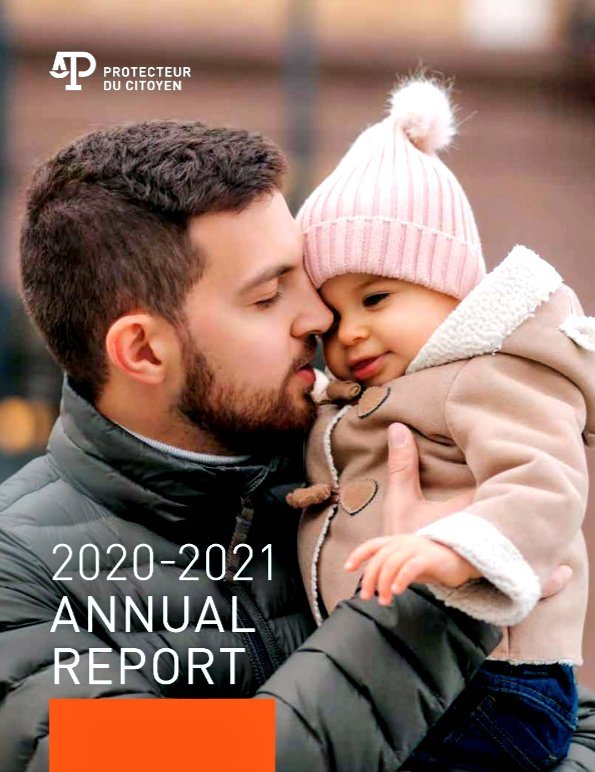
Findings in Quebec ombudswoman Marie Rinfret’s 2020-2021 annual report, which was tabled in the National Assembly last week, raise serious questions about the provincial government’s ability to ensure the quality and integrity of the services it provided in the past year during the COVID-19 crisis.

Action needed, said Rinfret

The Quebec ombudswoman’s office is mandated to act impartially and independently of the government to ensure that the rights of citizens are upheld in their dealings with publicly-provided services.

In a statement issued by the ombudswoman’s office, Rinfet suggested quick action will be absolutely necessary to correct known and recurrent problems in the system that compromise citizens’ rights.

“We think immediately of the full brunt of the tragedies in residential and long-term care centres during the first wave,” the ombudsman’s office said.

Impact of the pandemic

The provincial ombudswoman said the past year exposed an alarming society-wide situation affecting people who were severely impacted by the pandemic, who suffered physical and mental health problems, bereavement, loss of income, increased poverty, isolation, anxiety and violence.

At a press conference in Quebec City, Rinfret pleaded for Quebec public service providers to show more empathy to the public. They must learn “to deal with situations that are outside the rules, outside the framework,” she said.

The COVID-19 pandemic has only accentuated already problematic situations in the provision of public services, notes the ombudswoman.

Examples documented

Beyond the daily case statistics, she said the pandemic created and exacerbated many vulnerabilities for an incalculable number of individuals. Here are some examples cited by Rinfret’s office:

  • A student in an anglophone school was about to start her last year of secondary studies when she informed her that she no longer qualified for instruction in English. The reason: a change in her father’s immigration status. In June 2020, her father had approached the examining committee and the decision was cancelled. However, the department was sluggish to act on it. In late September, the ombudswoman intervened. The department immediately sent the family the authorization needed for the student to go back to her school.
  • The ombudswoman received complaints from the residents of a housing cooperative about, among other things, harassment and bullying by the administrator and the manager. The SHQ had refused to investigate on the pretext that it was not empowered to do this. The ombudswoman argued that the SHQ did have jurisdiction to intervene under the applicable act, and in the end, it agreed to do so.
  • Rinfret noted that in the past year, the Quebec Ministry of Work, Employment and Social Solidarity took measures to adjust to its clients’ difficulties during the COVID-19 crisis, for example suspending recovery measures and postponing sending out claim notices.
  • On the downside, however, the ombudswoman also pointed out that the Ministry of Immigration, Francization and Integration refused applications for the Quebec Selection Certificate because candidates had to be employed at the time of filing. She noted that in the wake of massive business closures because of COVID-19, many applicants were laid off temporarily. On the ombudswoman’s recommendation, the department agreed to review the requirement.
  • Provincial prison and correctional services tried to compensate for the suspension of family visits to detainees. As a result, the Ministry of Public Security decided to use videoconferencing so that detainees could maintain contact with the outside world, although the videoconferences were often cancelled because of staff shortages.
  • At the beginning of the pandemic, in accordance with a directive by the Ministry of Health and Social Services, family visits were allowed in hospital palliative care units and hospices. However, some hospitals didn’t comply, meaning that many people could not be with loved ones when they died.

Just one bath a week

In other issues raised by the ombudswoman, the quality of home care was denounced. Rinfret noted that a growing number of institutional care facilities now give patients and residents just one bath per week, instead of two or three as previously.

She said there are also disparities in the level of services provided depending on the region of the province. Rinfret also was concerned about the overcrowding of hospital emergency rooms, which she said could jeopardize the quality of care and the safety of patients.

‘CHSLDs had been grappling with staff shortages for a long time, but the authorities had put the problems on the back burner,’ said the ombudswoman

The private sector in Quebec’s health services network was not spared her criticisms. Among the shortcomings, she noted that private senior citizens’ retirement residences had staff shortages, medication mistakes were made and there was lack of supervision. Her office also received complaints about long-term care facilities.

Exceptional situation

Despite her criticisms about the provincial government’s oversights, Rinfret’s department said it took into account the exceptional circumstances brought about by the COVID-19 crisis.

“It would be unrealistic and unfair to disregard the enormous challenges for government departments, agencies and healthcare institutions posed by an ongoing unprecedented crisis,” the office said. “While respecting citizens’ rights requires that public services carry out their mission effectively, the Quebec ombudsman is aware of the enormous weight of this unfamiliar situation.

‘Gov’t not exempted’

“However,” the office added, “This does not exempt government from listening to the people who come to it and [from] responding with understanding, openness, creativity and compassion so that these citizens receive the public services to which they have a right.” The ombudswoman’s office said it handled 21,803 requests over the past year, received 42,038 phone calls, answered 66 per cent of these in under 20 seconds, and had 98 per cent of recommendations accepted by the government’s various departments.

Bill 96 should be scrapped ‘in its entirety,’ says Quebec Community Groups Network

New language law ‘will change Quebec, and not for the better,’ QCGN claims in scathing brief

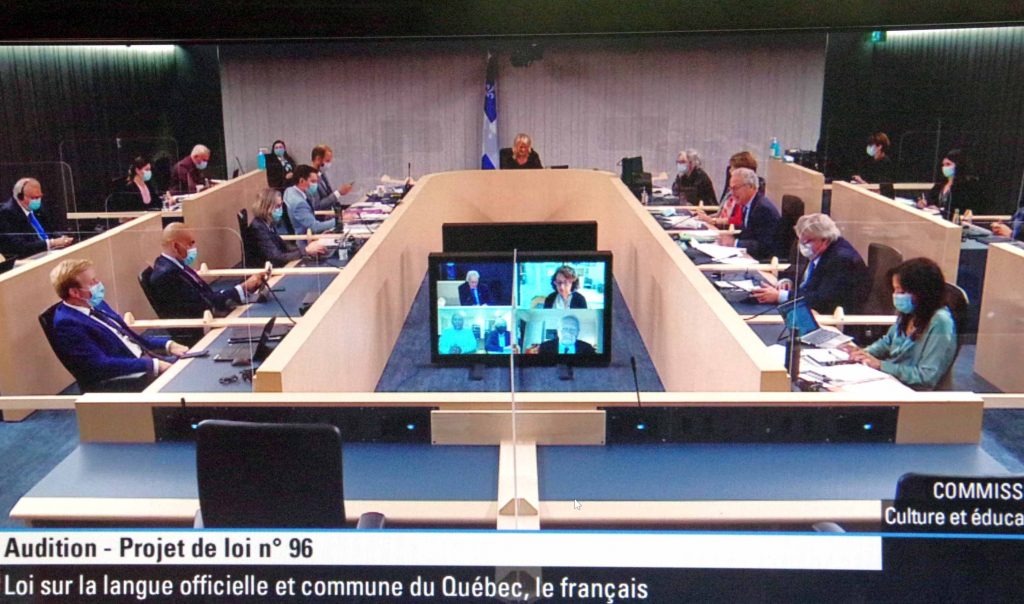
In a memorandum presented last week to the National Assembly committee working on the provincial government’s Bill 96 to strengthen Quebec’s language rules, the Quebec Community Groups Network said that even though the French language in Quebec “can and should be protected,” Bill 96 is not the way to go about it.

“Bill 96 is deeply problematic,” said QCGN president Marlene Jennings, reading from the conclusion of the English-language community lobby group’s statement.

‘Outdated and odious’

“Its measures are based on outdated and odious approaches to enforcing the use of the French language. It will create barriers and mistrust. It upsets a social and linguistic peace that has lasted for decades. And it sends a signal to speakers of other languages:

“No matter how integrated into Quebec society or how willing to speak French in the public space, speakers of other languages are not fully ‘members’ of Quebec society,” the statement continued. “Like Bill 21, it re-shapes Quebec law and society to create clear ‘insiders’ and ‘outsiders. And at the same time, it withdraws fundamental human rights protection from everyone.”

Overriding human rights

More fundamentally, Jennings and the QCGN contend that Bill 96 is aimed at an entirely different objective – that being “the refashioning of the Quebec state, and the move away from liberal constitutional democracy.”

They said that the use of constitutional human rights overrides (notwithstanding clauses) effectively dismantles human rights protections that have been in place for 45 years.

The Quebec National Assembly’s Committee on Culture and Education heard from the Quebec Community Groups Network last week.

“It expands the power of the National Assembly – and the government in power – and removes the role of the judiciary in reviewing laws for compliance with the Constitution. It increases and centralizes executive power and control over both the public and private sectors.

“These changes are of serious and major concern for democratic governance in Quebec, and should be troubling to all Quebecers. Bill 96 will change Quebec, and not for the better.”

Should withdraw Bill 96

The QCGN’s number one recommendation is that Bill 96 be withdrawn “in its entirety.” If the bill is not withdrawn completely, they say it ought to be overhauled and include changes such as these:

  • Remove the human rights overrides;
  • A reference question on the constitutionality and meaning Bill 96 should be sent without delay to the Court of Appeal of Quebec;
  • The right to communication and services in English should never be based on eligibility for English instruction;
  • Remove provisions which have the most egregious impact on business, including francization requirements, justification of hiring practices, language of contracts, justice provisions and education permit restrictions.

The QCGN also emphasized in its brief that “Bill 96 should not in any way interfere with the right to receive health and social services in English as guaranteed in the Act respecting health services and social services. Bill 96 should include an explicit carve-out for this right.”

‘You accept Bill 101?’ Skeete asked

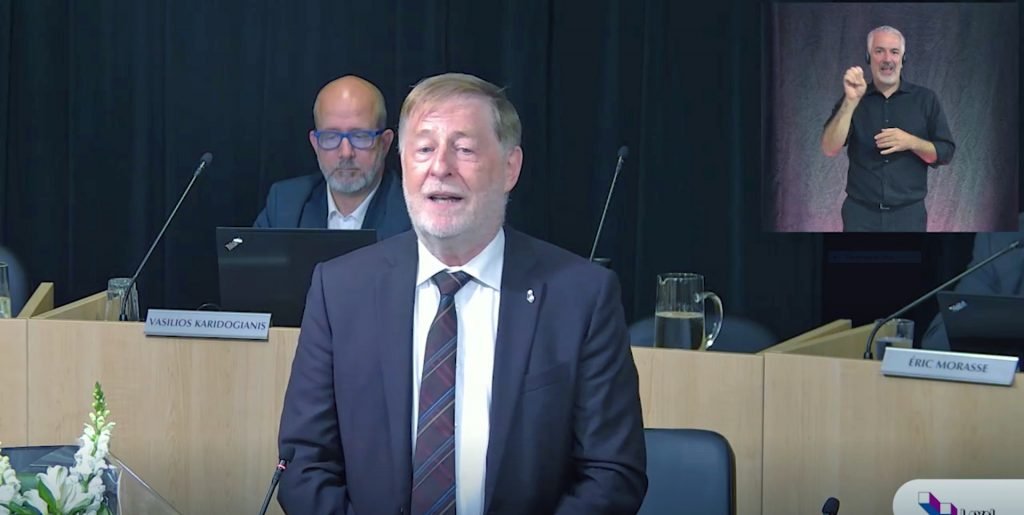
CAQ MNA for Sainte-Rose Christopher Skeete (who is Parliamentary Assistant to the Premier for Relations with English-Speaking Quebecers) asked Jennings whether the QCGN agrees with Bill 101, which was passed by the Parti Québécois government in 1977 and forms the basis for Quebec’s current language laws.

“Does the QCGN accept that this law was necessary for the survival of French in North America?” he asked. “The QCGN is a defender of the French language,” Jennings replied. Skeete interrupted, insisting he be given a yes or no answer, “because there are plenty of defenders of the French language, but they’re not all for Bill 101,” he said.

CAQ MNA for Sainte-Rose Christopher Skeete asked qcgn PRESIDENT mARLENE Jennings whether the QCGN agrees with Bill 101

Jennings responded, “Yes, the QCGN agrees with Bill 101, in the sense that we think it has had positive influences, and we think that it wasn’t used to one hundred per cent. So, we are asking the question why Bill 96, taking into account that there are plenty of things in Bill 101 that are never used.”

‘Why then not Bill 96?’

Skeete continued, “Why then, if the QCGN accepts the notions in Bill 101, would it want to allow, for example, the schooling of people coming from Great Britain, Australia and India in the public school system as Anglophones or receiving documents in English? Why does the QCGN, if it accepts Bill 101, not want the integration into French of newly-arriving people in Quebec?”

Replying, Jennings said she hadn’t understood the question. By the time Skeete rephrased it, Lise Thériault, chair of the Committee on Culture and Education, who was carefully keeping tabs on the time allotted to each participant, declared Skeete’s time had run out and Jennings was cut off before she could answer.

Weather

Laval
light rain
7.8 ° C
7.8 °
7.8 °
98 %
3.2kmh
100 %
Mon
14 °
Tue
13 °
Wed
10 °
Thu
11 °
Fri
16 °