City is saving $100,000 annually by using winter tires all year, mayor tells March council
Answering questions during the March city council about Alto’s high-speed train which could include a station in Laval, Mayor Stéphane Boyer defended the city’s decision to sign a non-disclosure agreement with the consortium leading the project, in order to prevent land speculation from driving up costs.
Alto, also known as the Toronto–Quebec City High-Speed Rail Network, was announced more than a year ago by then-Prime Minister Justin Trudeau. While a design phase has been projected to last for up to five years, opening of the system is scheduled between 2035 and 2044.
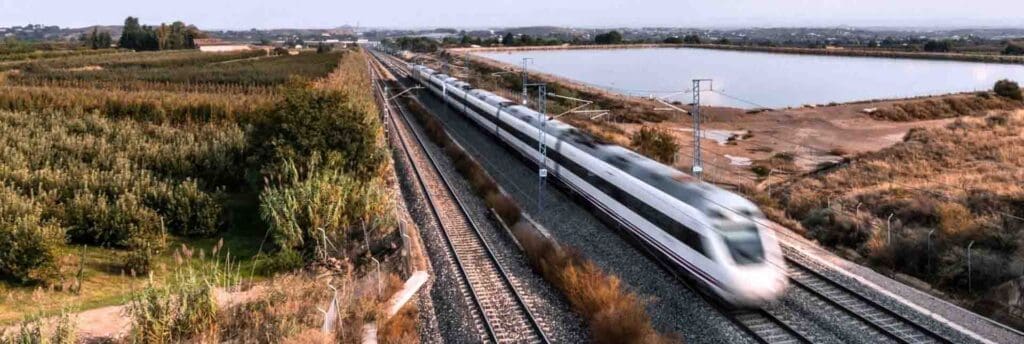
Hi-speed train coming to Laval
Trains on the dedicated 1,000-kilometre rail route would reach top speeds of up to 300 km/h, which is nearly double what Via Rail can currently offer. Besides Toronto, Quebec City and Laval, there will also be stations in Peterborough, Ottawa, Montreal and Trois-Rivières.
With a population that will soon be reaching 440,000 – 1.2 million when you include the North Shore – Laval is seen as the logical location for an Alto station because of its strategic proximity to the northern suburbs where the population also continues to expand.
Based on illustrations and maps of the Laval region that Alto displayed during a one-day public consultation on the project at the Sheraton Laval in January, the company is apparently leaning towards a location somewhere inside the multimode transit hub in Laval’s downtown core.
Most people don’t yet know
“In speaking with my fellow citizens, I realized that the majority of people from Laval were not aware that the high-speed train will be passing through Laval and there will be a station, which I found surprising,” Pascale Durocher told the mayor during the March 10 council meeting’s public question period.

She maintained that in early February, Denis Fafard, director of the City of Laval’s mobility office, told her that the city was near the point of signing a confidentiality agreement with Alto. “He told me that the city will have access to information from Alto that it will not be able to share with the population,” she said.
She asked the mayor what type of information that might be, and whether the city will know before residents the possible locations of the station, as well as the possible Alto rail routes.
Responding, Mayor Boyer said that at this early stages of the project “there remain many question marks on many topics, but that will become clearer in time.” However, he confirmed that the City of Laval routinely signs confidentiality agreements with outside parties when deemed necessary and appropriate.
Non-disclosure agreements
(It may also be worth noting that several municipalities all over the Montreal region along the route of the Réseau express métropolitain (REM) signed non-disclosure agreements with the project’s builder, CDPQ Infra, when it was launched about a decade ago.)
“This is normal – we did so, for example, with the REM,” said Mayor Boyer, “because we are sharing studies back and forth between us.
“So, obviously when important transit projects are being implemented in municipalities, it’s sometimes necessary to open up streets, redo intersections, [share] data from the city on traffic studies we may have done in the past. So, there is a multitude of topics or studies which technical teams from the city and Alto may have to exchange over time.
“There’s also an issue involving speculation,” he added. “Obviously we don’t know exactly where the project will be passing or where the station will be. But obviously Alto must follow certain measures in order to avoid, among other things, people speculating.
Minimizing expropriations
“Because from the moment, for example, when it’s known there’s going to be a train station, it can obviously be tempting for certain people to buy up properties to make money.”
In spite of this, Boyer said all the information about the project that the city has access to will eventually become public, although certain phases in the project will have to be completed before then.

He said he met for talks with the executive-director of Alto on two to three occasions. “Their wish is to minimize, to maximally reduce the number of expropriations. We don’t know for now whether there will be any, and if so, how many there could be. But definitely in the region of Laval, what I am told is that the hope is to pass as much a possible on autoroute rights-of-way.”
But if there were to be expropriations, Boyer noted, the legal procedure would see land owners compensated up to their property’s prevailing market value, although additional sums might also be possible in situations where owners feel they should receive more. But as the high-speed train is a federal government project, Mayor Boyer said the City of Laval has no involvement whatsoever in the expropriation process.
Mini-farm fate and cost-cutting
In a follow-up to the city’s recent cost-cutting decision to close the mini-farm at the Centre de la nature and replace it with a mobile children’s petting zoo, the mayor revealed at least two of the other measures the city is undertaking beginning this year to trim its expenses.
According to Boyer, the city managed to cut $100,000 from its nearly $1.3 billion 2026 budget by deciding not to store data from the video feeds of 600 surveillance cameras for months on end. Instead, it’s now kept for just 30 days, said the mayor.
As well, he revealed that the city has decided not to use summer tires on its vehicles anymore, keeping winter tires on year-around, for a savings of at least $100,000 in materials and labor costs.
In spite of Mayor Boyer’s cost-cutting announcements, the closing of the mini-farm didn’t sit well with the Action Laval opposition.
Action Laval city councillor for Saint-Bruno David De Cotis made a lengthy statement deriding the administration for ignoring a 20,000-signature petition signed by Laval residents demanding the city reverse the cost-cutting decision to close the mini-farm.