A cross-section of the community gathers to pay respects
Members of the Canadian Forces, including soldiers from the Royal 22nd Regiment’s Fourth Bataillon, as well as Air, Sea and Army Cadets, joined dignitaries and citizens at Laval’s War Cenotaph near city hall last Sunday morning for a ceremony marking the annual Remembrance Day.
From the left Royal Canadian Legion Branch 251 Sergeant at Arms Chuck Washburn and branch First Vice-President Dean McKay pay their respects during the Remembrance Day ceremony at the Laval War Cenotaph last Sunday morning. (Photo: Martin C. Barry, Newsfirst Multimedia)
Among the dignitaries depositing wreaths at the base of the monument to the war dead on Souvenir Boulevard were local Liberal MPs Annie Koutrakis, Angelo Iacono and Yves Robillard, Quebec Liberal MNA Virginie Dufour, and CAQ MNAs Céline Haytayan, Alice Abou-Khalil, Valérie Schmaltz and Christopher Skeete.
Laval city councillor for Vimont Pierre Brabant deposited a wreath on behalf of the municipality. This year’s Silver Cross Mother was Niki Psiharis, representing mothers who have lost a son or daughter, be it in action or over the course of military duty.
Laval Liberal MPs Angelo Iacono (far right), Annie Koutrakis and Yves Robillard deposit a wreath last Sunday morning at the War Cenotaph. (Photo: Martin C. Barry, Newsfirst Multimedia
Many other representatives of the Canadian Armed Forces, the 4th Bataillon Royal 22nd, RCL Branch 251, the Navy/Army/Aviation Cadets, the Sir Wilfrid Laurier School Board (SWLSB) and the Centre de services scolaires de Laval (CSDL) also deposited wreaths to pay their respects.
This year’s Remembrance Day commemoration also saw a field cannon fired off from a spot near the war memorial in tribute to those who suffered injuries or who gave their lives for their country.
The Royal Canadian Legion’s Branch 251 in Chomedey, which has been organizing the event annually, makes great efforts to organize the commemoration and starts working on it each year as early as May.
City working collaboratively on creative solutions with MIT’s Senseable City Lab
The City of Laval brought together several dozen members of its information technology community last month for some creative brainstorming on how to make downtown Laval a better place to live and to do business.
From the left, Laval mayor Stéphane Boyer and Laval city councillor Christine Poirier (an executive-committee member with responsibilities for economic development) took part in the closing plenary session on Oct. 27. (Photo: Martin C. Barry, Newsfirst Multimedia)
With help from IT experts and researchers from Massachussetts Institute of Technology’s Senseable City Laboratory, 40 participants in the two-day long conference held at the Cosmodôme developed concepts and ideas on how to creatively integrate new technologies downtown to improve the quality of life of residents and business people.
Working with MIT
It was the third time the City of Laval worked collaboratively with MIT on a project designed to generate ideas to improve aspects of life in the emerging downtown core. From Oct. 26 – 27, conference participants from Laval were led by MIT staff and Masters degree students in a range of workshops.
The MIT Senseable City Laboratory is a digital laboratory within MIT’s City Design and Development group, within the MIT Department of Urban Studies and Planning, working in collaboration with the MIT Media Lab. The lab aims to investigate and anticipate how digital technologies are changing the way people live and their implications at the urban scale.
The goal of the participants, according to the city, was to explore how new analytical methods and technologies might be applied to improve the quality of life of the population, especially regarding the environment, transportation, housing, culture, agricultural food production and recreation.
Results to be published
At the end of the two-day exercise, the participants had the opportunity during a plenary session to present the concepts they developed. Additional reaction and feedback were gathered at the same time. According to the city, the information and data generated by the workshops will be published in a guide unique to Laval, setting out in detail the various ideas for furthering the development of the downtown area.
Laval is the first city in Quebec to have signed up for MIT’s Senseable City Lab program. The internationally-recognized program uses the sessions it leads with municipal officials to study interactions between cities, residents and technologies to develop leading-edge solutions.
The two-day MIT Senseable City Lab seminar included brainstorming sessions to develop new concepts and ideas for improving the quality of life in Laval’s emerging downtown core. (Photo: Martin C. Barry, Newsfirst Multimedia)
Multidisciplinary approach
The Lab’s work draws on diverse fields such as urban planning, architecture, design, engineering, computer science, natural science and economics to capture the multi-disciplinary nature of urban problems and deliver research and applications that allow citizens to make choices leading towards a more liveable urban experience. Among the lab’s partners are a group of corporations that includes AT&T, General Electric, Audi, ENEL, SNCF, as well as cities such as Copehhagen, London, Singapore, Seattle and Florence.
Projects undertaken by the Senseable City Lab have included “The Copenhagen Wheel,” which debuted at the 2009 United Nations Climate Change Conference, “Trash_Track,” shown at the Architectural League of New York and the Seattle Public Library, “New York Talk Exchange,” featured at the Museum of Modern Art, and Real Time Rome, included in the 2006 Venice Biennale of Architecture.
Boyer sees the potential
During the plenary session on the last day, Mayor Stéphane Boyer told the gathering that there is a lot of potential in Laval for the implementation of the emerging concepts and ideas. “First of all, we’re a young city in full growth,” he said.
“We’re a city with a lot of diversity, with urbanized and rural areas. There’s a lot of space still that remains to be developed, re-developed and reimagined. We have an economy that is super-diversified. This is a place that is boiling over with activity for rethinking and reimagining Laval’s future.”
Laval council gives Quebec Sign Language motion unanimous approval
During the September meeting of Laval city council, Saint-François city councillor Isabelle Piché reacted with great enthusiasm when a resolution she tabled to ask Quebec to recognize Quebec Sign Language as the province’s preferred signing method for the deaf was passed unanimously by the members of council.
Growing recognition
LSQ is recognized by several levels of government, including the federal government. The Ontario government recognizes LSQ in its legislation for the education sector.
Saint-François city councillor Isabelle Piché.
“LSQ is part of the culture of Quebec and has unique peculiarities,” Piché said in a statement. “While what we did is beyond the limits of our municipality, it is the community as a whole that will benefit from these efforts.”
Message to Quebec
Piché said council’s unanimous decision places Laval’s city councillors in a position to lead on this issue across the province. “Our message to Quebec is a strong one, and it is all of the municipal council that unanimously agreed to make this request to Quebec,” she said.
According to several online sources, Quebec Sign Language (Langues des signes du Québec) is used primarily in Quebec, Ontario as well as New Brunswick, and is greatly influenced by French Sign Language (LSF) and American Sign Language (ASL).
Predominates in French
LSQ is said to have been first developed around 1850 by religious communities to help teach children and adolescents with hearing difficulties in Quebec. Since then, LSQ has become the predominant sign language amongst the Francophone deaf in Quebec and across Canada where French is spoken.
In 2007, Ontario passed legislation making it the only region in Canada at that point that recognized LSQ in any capacity. At the time, the province’s enabling legislation noted that “the Government of Ontario shall ensure that [ASL, LSQ and First Nations Sign Language] may be used in the courts, in education and in the Legislative Assembly.”
Federal recognition
In 2019, the federal government passed legislation which recognized ASL, LSQ as well as Indigenous sign languages as the primary languages for communication by deaf persons in Canada. The legislation also established the requirement of all federal information and services to be available in these sign languages.
In addition to these developments, there have been calls to modify Quebec’s Charter of the French Language to include provisions for LSQ. However, since then there has never been sufficient agreement to allow a bill to officialize the status of LSQ in Quebec to be passed.
Halloween in Saint-Bruno’s Lausanne Park.
Saint-Bruno children enjoyed a truly monstrous Halloween
Lausanne Park in the Laval district of Saint-Bruno was invaded Halloween night by a virtual army of little zombies, vampires and ghosts. The Halloween celebration was organized by local Action Laval city councillor David De Cotis.
An estimated 22,000 pieces of candy were handed out during the evening, and up to 8,000 people turned out. “The new facilities installed in the park in recent years have more and more become a meeting place for the citizens of the sector,” said De Cotis. “This is how we develop links while creating a strong community.”
Laval honours its volunteers with an evening out
On the evening of Oct. 27, the City of laval held a celebration for all the volunteers who worked arduously over the past year to make Laval a better place to live for all residents.
In all, 500 guests were brought together at the Château Royal in Chomedey for an evening of entertainment hosted by Élyse Marquis.
“Every day, thousands of volunteers give their time within more than 430 organizations in Laval,” said Mayor Stéphane Boyer. “These people make a difference in the life of their fellow citizens. Volunteering is the very essence of community involvement and an important aspect for the proper functioning of our society.”
The five ambassadors were:Benoît Brabant, of FC-Laval; Andrée Gignac, of Festivités de l’Ouest; Nicole McCann of the du Centre de bénévolat Moisson Laval; the Centre SCAMA; and the Centre jeunesse-emploi de Laval.
24/7 reserved BRT lanes quickly connect eastern Laval to central Montreal
(TLN) A new rapid Rapid Transit Bus (BRT) service started to operate from Laval to Montreal last Monday Nov. 7.
Geneviève Guilbault, Deputy Premier of Quebec and Minister of Transport and Sustainable Mobility, Emmanuel Dubourg and Angelo Iacono (Members of Parliament for Bourassa and Alfred-Pellan respectively), on behalf of Dominic LeBlanc, Minister of Intergovernmental Affairs, Infrastructure and Communities.
A grand opening
Also there to inaugurate the brand-new Pie-IX BRT on Thursday last week were the mayor of Montreal, Valérie Plante, the director general of the ARTM, Benoît Gendron, as well as the chairman of the STM board Éric Alan Caldwell.
They were accompanied for the occasion by representatives of the City of Laval, the STL, Exo, the SQI and the boroughs of Mercier–Hochelaga-Maisonneuve, Montréal-Nord, Rosemont–La Petite-Patrie and Villeray–Saint-Michel–Parc-Extension.
Laval-Montreal trajectory
The new high-speed bus service crosses a distance of 11 kilometres, beginning at Saint-Martin Blvd. in Laval where there are 750 incentive parking spots, going towards Montreal’s Pierre-De-Coubertin Ave.
The service is composed of reserved lanes 24h/7days, marked by a colored roadway, mainly situated in the middle of the road, rather than in the right lane. Once completed, the Pie-IX BRT will serve the east of Laval crossing four City of Montreal boroughs.
Buses of the STM, STL and Exo (as of 2023) will circulate along the corridor of the RBS Pie-IX.
It will connect to the green line of the Metro (Pie-IX station), the STL bus service in Laval and the Exo5 commuter train to Mascouche (St-Michel-Montreal-North Station). The 439 Express Pie-IX will become the main lane of the BRT corridor and its daytime frequency will be increased on Montreal Island with three different trajectories.
Ottawa’s contribution
The Canadian federal government granted over $85 million of funding for the completion of this project and the rehabilitation of the Pie-IX bridge. Increased mobility, economic development and improved lifestyle for citizens are at the heart of this ambitious project.
“Thanks to this project, the residents of Laval east and the four boroughs of Montreal will be served by a rapid and safe bus service,” said Alfred-Pellan Liberal MP Angelo Iacono. “This new public transit service will entice residents and visitors, to avoid using cars in favor of more ecological and rapid transportation means,” he added. “This will help reduce our carbon footprint and take a step forward towards a greener future.”
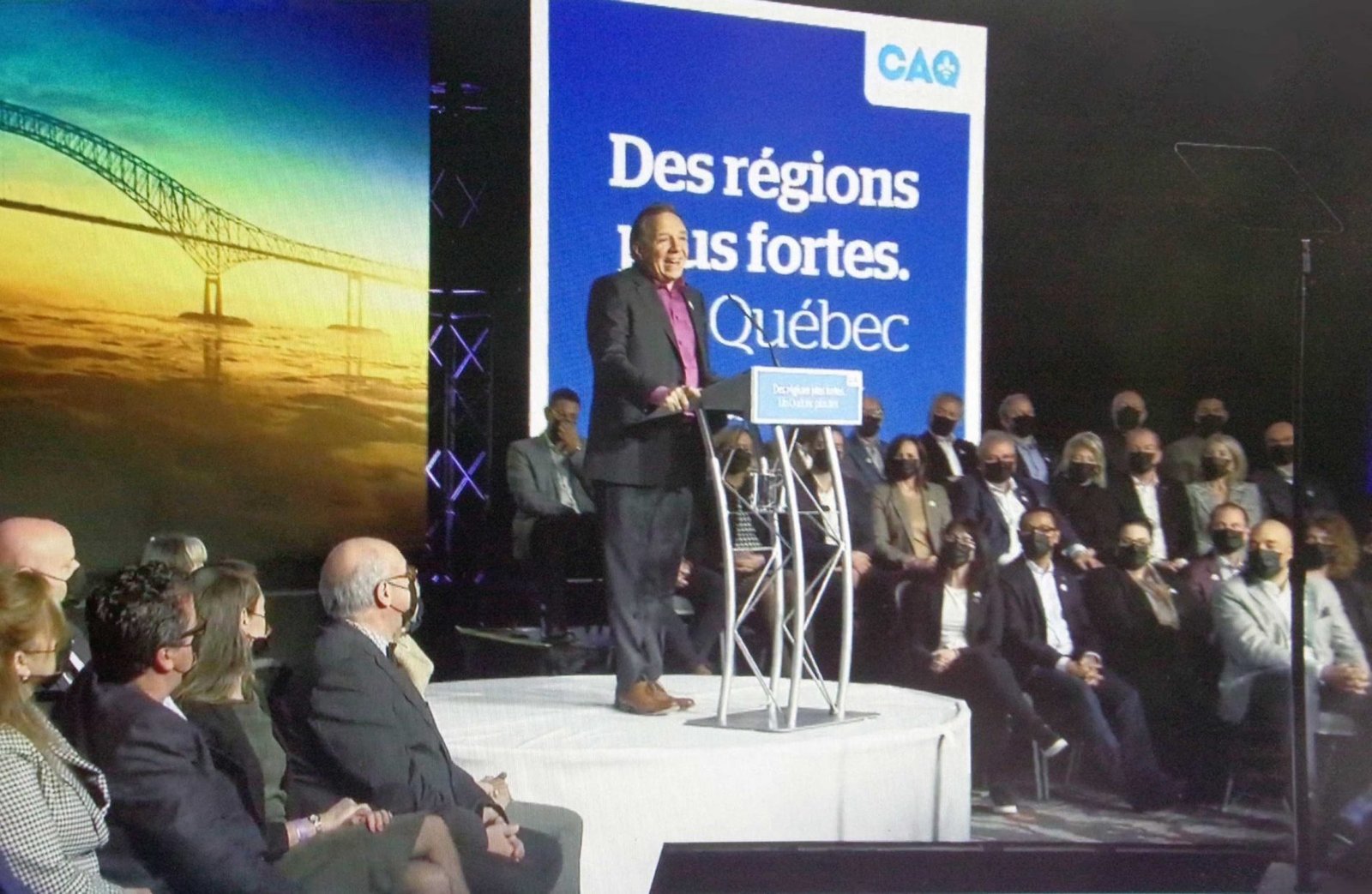
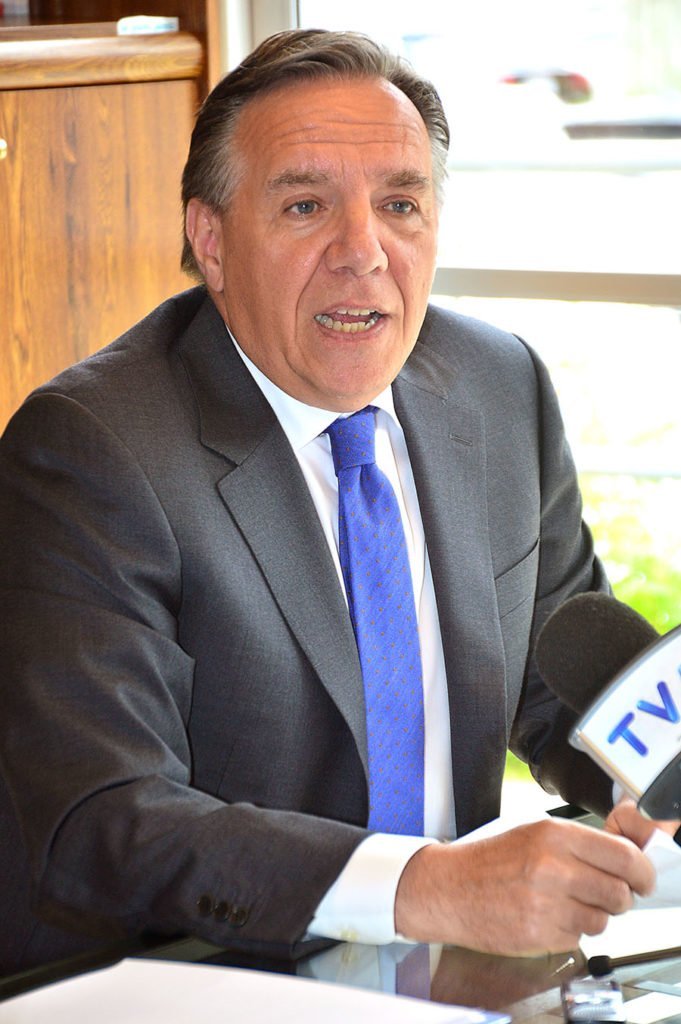
(Newsfirst) One thing that defines François Legault as Quebec Premier is that when he promises money to citizens he delivers.
During the last election campaign, he promised to send a cheque in the amount of $ 400 or $ 600 to about 6.4 million Quebeckers before Christmas in order to help them to cope with the recent inflation trend. The cheques are on their way to you.
The details
All those whose gross annual income (before deductions) does not exceed $50,000 will be entitled to a cheque for $600. Those who earn less than $ 100,000 a year (but more than $ 50,000) will be entitled to an amount of $ 400, confirmed the Premier at a press conference last week.
Three things you should know about the cheque that the CAQ government will send you to help you with inflation:
To determine the amount of the cheque, Revenu Québec will rely on the tax returns sent last spring. All Quebeckers eligible for financial assistance will automatically receive it.
According to government stats, 6.4 million Quebeckers earn less than $100,000 per year, or 94% of citizens aged 18 and over. Of these, 1.8 million should receive a cheque for $400, while 4.6 million Quebeckers, with incomes of less than $50,000 per year, should get the cheque for $600.
Unlike the $500 tax credit granted at the begin[1]ning of the year, this new provincial assistance will be paid in the form of a cheque.
Thus, the amount to which you are entitled will not be revised downwards if you have an outstanding balance with Revenu Québec.
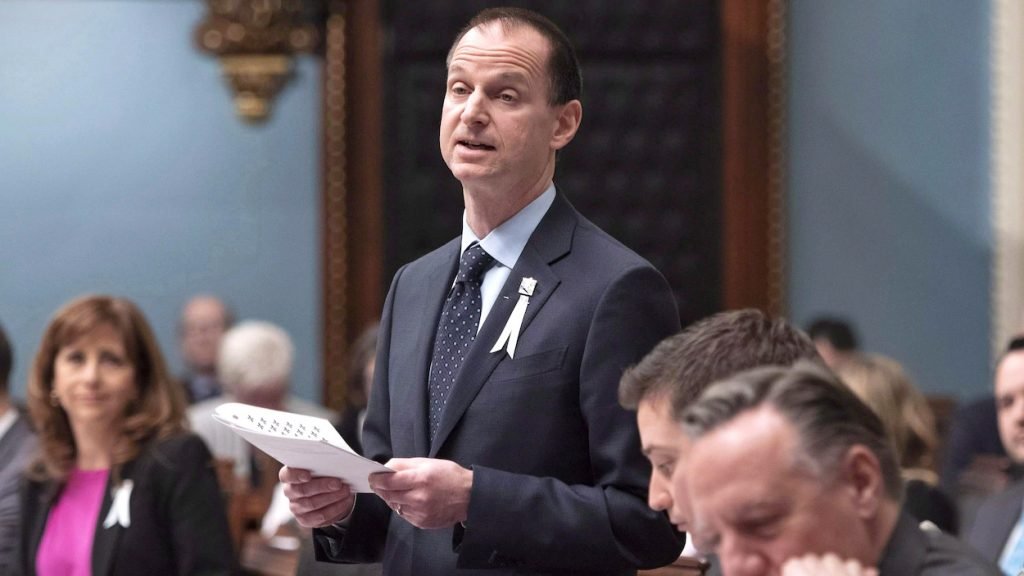
Quebec Finance Minister Éric Girard. (File photo)
You will receive the “gift” by early December. Details surrounding the implementation of the financial assistance, will be confirmed at the announcement of the government’s economic update (or mini-budget), scheduled on November 29.
Furthermore, the government as promised, will assist seniors over 70 with a $ 2200 based again on their gross annual income before deductions.
But considering the recent increase in interest rates, which has created a financial burden on households, the government does not intend to review the cheques amounts.
Finance Minister Eric Girard remains of the opinion that the amounts that will be sent to citizens are “appropriate” in the current economic context.
To say we had hardly gotten to know Dominique Anglade by the time the Quebec Liberal Party’s leader announced her resignation last Monday is no understatement.
Anglade announced her decision at a news conference in Montreal, her departure coming a little more than a month after the Quebec provincial election.
The past decade has marked a fairly-long and circuitous journey for Anglade. The Laval News can remember, back in 2012, when she was one of a handful of newly-minted Coalition Avenir Québec candidates who were trotted out for a press conference prior to that year’s provincial election.
Although she lost in Fabre to the Quebec Liberals’ Gilles Ouimet, Anglade was a stand-out at the time among the other mostly bland CAQ candidates.
While they responded to questions with standard platitudes, Anglade expressed herself with some original thinking and ideas, distinguishing herself as someone who seemed to possess greater potential to take on some eventual form of higher leadership.
Thus, the irony is that following her decision to join the Quebec Liberal Party in 2015, followed by her nearly uncontested bid to become the PLQ’s leader in May 2020, whatever promise Anglade might have held as the first woman to lead the party (and the first black to lead a provincial party in Quebec), she turned out (in the harsh and unforgiving reality of live fire) to have actually been a dud.
Although Anglade managed to secure for the PLQ the shaky status as the Official Opposition in the National Assembly following the October elections, there is no getting around the fact that under her leadership, the Liberals won just under 15 per cent of the popular vote — the lowest share in its history.
Her lacklustre performance during the election betrayed a seeming lack of personal confidence, at a time when incumbent CAQ Premier François Legault was shining like a supernova, and the polls were predicting long before election day that he would easily be winning a second mandate.
Although the Liberals hung on to most of their stronghold seats on the island of Montreal, but conversely were shunned by a large majority of francophone voters, the party ended up wining just 21 seats.
In another example of a fumble by Anglade, the 21 seats were reduced to 20 after Vaudreuil PLQ MNA Marie-Claude Nichols was kicked out of caucus by Anglade, further contributing to speculation about Anglade’s temperament and her future as the party’s leader.
“Our party is confronted by numerous challenges,” Anglade said last Monday, while conceding that she was leaving, and admitting at the same time that the Official Opposition would be in an especially vulnerable position if she were to remain and allow the apparent rift to continue.
The 2018 election is often interpreted as having been a turning point in Quebec politics, signalling the end of the traditional debate about federalism and sovereignty in the province. Many experts have said that the Liberals, under Anglade, failed to reposition themselves in this new political reality.
Over the past century and a half or so of the Quebec Liberal Party’s existence, the PLQ has seen its fortunes rise and fall, with long periods out of power when Maurice Duplessis’s Union National governed during several uninterrupted decades, as well as lengthy periods when the Parti Québécois seemed to rule endlessly until finally interrupted by a return of the provincial Liberals.
Still, the Liberals always held faithfully to their core belief in being able to provide a reasonable and stable middle-ground politically, when polarizations on the political spectrum cast other parties to each end with irreconcilable differences.
It is perhaps in that sense that the Liberals, under a new leader and a renewed vision, will once again be able to rise to the occasion and play a useful role as the reconciler and mediator in Quebec politics.
Denies city was hiding anything after ‘Cité du Cinéma’ re-zoning cancellation
Following a minute of silence at the beginning of the the Nov. 1 Laval city council meeting, Mayor Stéphane Boyer opened with some comments on the two recent tragic events in Laval, in which a father allegedly killed his two children in Sainte-Dorothée, while a mother drove her vehicle into the Mille Îles River with two children aboard, resulting in the death of one child and her death in hospital around a week later.
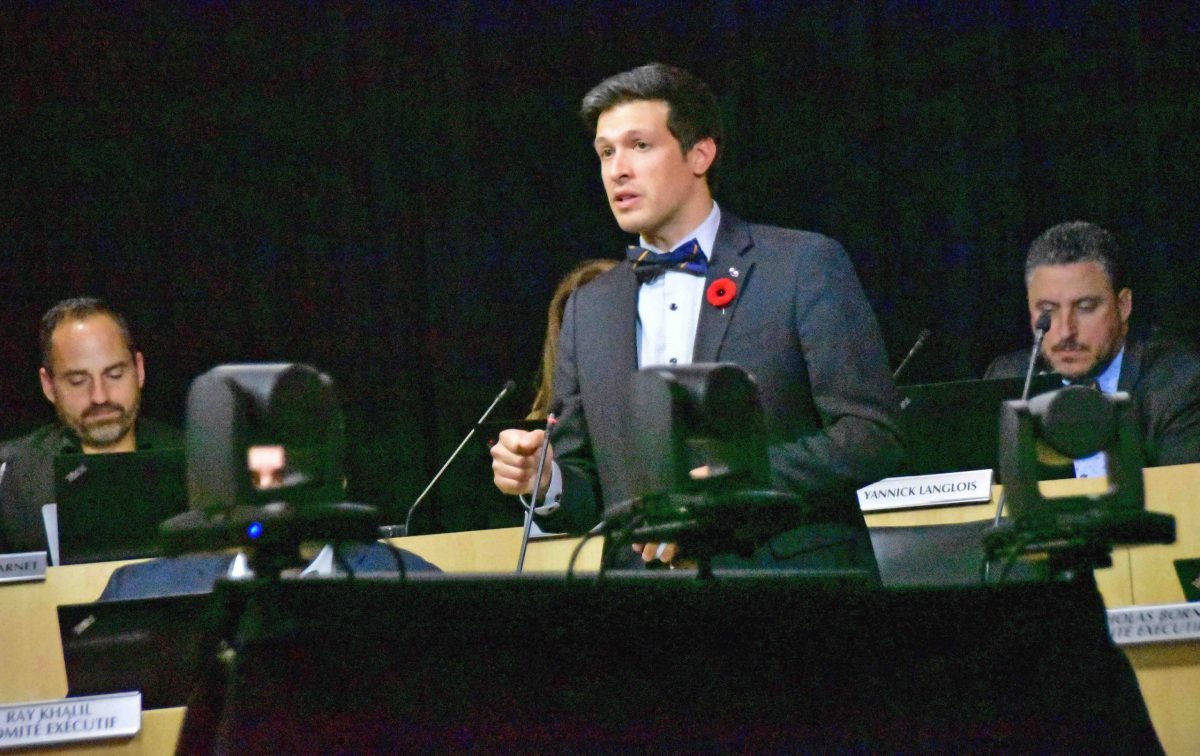
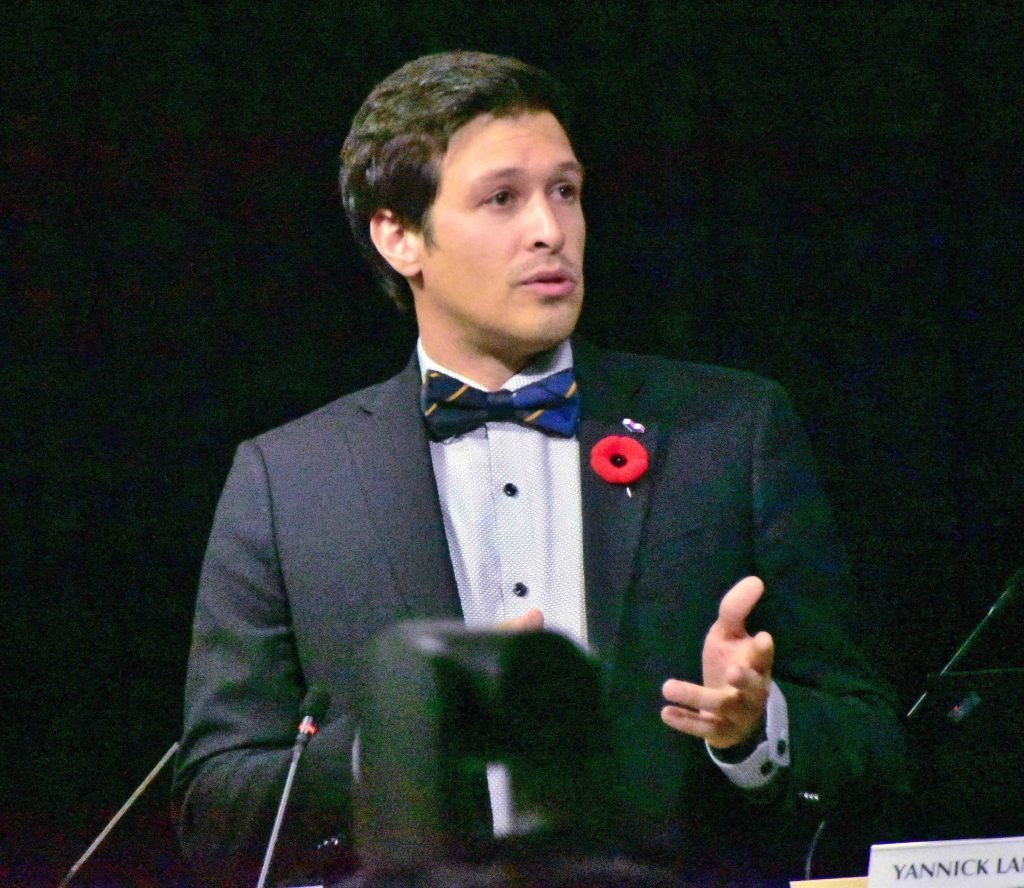
Laval mayor Stéphane Boyer denied the administration concealed information about the Cité du Cinéma project in Saint-François during the Nov. 1 meeting of Laval city council. (Photo: Martin C. Barry, Newsfirst Multimedia)
“I think we’re all in a state of shock after learning of these events, these tragic things, which are impacting us all – I think a lot of people have been left dumbstruck,” Boyer said. “What I would like to send out as message is that apart from these tragedies there are human crises and people who need help.
Unanswered questions
“We haven’t yet gotten to the bottom of the story as to what happened, that is whether there was a question of mental health, or if these were people who were suicidal, or if there was domestic violence. But the investigations will be telling us a lot more.
“But what I want to say most of all tonight is that if you have problems, if you have issues or troubles getting along, don’t wait until you do something you could regret, because there are resources available.” He suggested that by calling 2-1-1, anyone experiencing personal problems will be put into contact with a professional who can provide references to several organizations that offer assistance, regardless of the nature of the situation.
Help is available
These organizations could include food banks, psychological help or other services. “2-1-1 can help you, and there are translators. So, even if you don’t speak French or English, there are people who can help translate should that ever become necessary.”
Mayor Boyer said he was calling on all Laval residents to stand united with the families now in mourning, but also with the city’s emergency services staff, including firefighters and the police who intervened in both incidents. “It was also a shock for them to have to go through, and so our thoughts are with them,” said the mayor.
Elections just three years away
While the month of November marks the end of the first year in power for the Boyer administration, and the mayor took the opportunity to recap some of his team’s accomplishments, former Laval-des-Rapides city councillor Pierre Anthian (who ran for mayor in the elections last year) got up during public question period to remind everyone that there are only 36 months left until the next elections in 2025.
During the business portion of the meeting, council moved to cancel a by-law passed in July, which would have re-zoned several sections of Marcel Villeneuve Ave. in Saint-François in order to allow for the Cité du Cinéma, a project put forth by Montreal film studio promoter Michel Trudel, to be built.
This was after a Montreal daily revealed the existence of a report written by Laval urban planning officials, who deemed the Cité du Cinéma project to be unfit because it didn’t conform to the current urban planning scheme for the area.
Future of Cité du Cinéma?
While some residents of Saint-François spoke out against the project as inappropriate for a partly residential, partly industrial, partly rural area of Laval, and have filed a complaint with the Quebec Municipal Commission, Trudel said recently that he hasn’t given up on his plans, even though some local media have reported that he withdrew the project from Laval city hall.
Fabreville city councillor Claude Larochelle, who leads the official opposition on Laval city council, asked Mayor Boyer why staff at city hall continued to work on the Cité du Cinéma project when it was all but obvious it would never get off the ground.
For his part, Mayor Boyer denied Larochelle’s allegation that the report stated the Cité du Cinéma project didn’t conform to Laval’s master urban plan. “There is a grey zone,” he said, adding that the plan allows for a range of interpretations as to what sorts of projects are appropriate in given zones.
Boyer denies a cover-up
The mayor also categorically denied Larochelle’s allegation that the information in the urban planning report was deliberately hidden from Laval’s residents.
“Normal procedures were followed,” said Boyer, while maintaining at the same time that the administration had been transparent. “We said in a plenary in front of all the councillors that urban planning wasn’t favourable to the project … To say that things were hidden is false” However, Mayor Boyer did acknowledge that the report, which was addressed to the urban planning commission (CCU), stayed within the CCU, although he called that “normal” and in keeping with the accepted way of doing things according to Quebec municipal law.
The current issue of the Laval News, volume 30-26, published on November 9th, 2022. Covering Laval local news, politics, sports, and our new section Mature Life. (Click on the image to read the paper.)
Front page of the Laval News, November 9th, 2022 issue.
More than two weeks after Laval Police found the bodies of his two children lifeless in their Sainte-Dorothée home, Kamaljit Arora has been ordered by a judge to undergo a psychiatric evaluation.
The scene on Lauzon St. around 9:20 pm on Monday Oct. 17. (Photo: courtesy of Laval Police)
A psychiatric assessment of the currently hospitalized 45-year-old was ordered on Thursday after three court appearances were previously postponed when Arora was deemed insufficiently coherent to understand what was going on.
Two murders and an assault are alleged to have been committed in the family’s home on Lauzon St. in Sainte-Dorothée on Oct. 17.
Arora has spent most of the past few weeks in a coma at Sacré Coeur Hospital in Montreal.
The Laval Police were called to the Arora home where they found the bodies of his 13-year-old daughter, Anzel, and 11-year-old son, Aaron.
Kamaljit’s wife was also assaulted, and he faces a charge of attempting to strangle her, according to police.
According to media reports, Laval police officers believe Arora tried to take his own life before they arrived on the scene.
The case will be heard again in court on Thursday Nov. 10, according to Quebec’s Crown prosecutor’s office.
Blaming persistent labour shortages for an inability to meet minimum production targets, Whyte’s Foods has announced the closure of its plant in the Laval district of Sainte-Rose.
The company, headquartered in Sainte-Thérèse just north of Laval, is due to close the Sainte-Rose facility on Dec. 30.
Over the next few weeks, the company will move its production and equipment to other plants in Quebec (Saint-Louis de Richelieu) and Ontario (Wallaceburg).
“Although the closure of the Sainte-Rose plant will result in the relocation of certain employees and equipment, the head office will remain in Quebec,” the company says in a statement.
“For Sainte-Rose employees, Whyte’s Foods aspires – to the best of its ability – to relocate as many as possible to its other Quebec locations,” says the company.
“The company has dedicated resources to help rehire those for whom relocation will not be an option and provide emotional support to those who feel the need. Physical and mental health is and will remain at the heart of Whyte’s priorities.”
Whyte’s Foods says it “is grateful for the Sainte-Rose community and would like to thank the community of Sainte-Rose for their support along the way.”
“This difficult decision was necessary to secure the future of the company. Whyte’s Foods will continue serving North American and Canadian food service consumers by producing high-quality pickled products.”