Home Blog Page 133

Three arrested following gunshots at condo tower

Investigators with the Laval Police Department have opened an inquiry into a firearms incident in a high-rise condo building in Quartier Saint-Martin near Daniel Johnson Blvd. in Chomedey last week that left some people shaken.

Around 11:15 pm on Oct. 14, gunshots were heard by residents of the building, which is located a short distance to the west of the Centropolis mall. Several calls to 9-1-1 were subsequently made.

Upon their arrival, LPD officers were able to locate the condo unit where the shots were believed to have come from, although it was found to be empty. They later arrested three suspects.

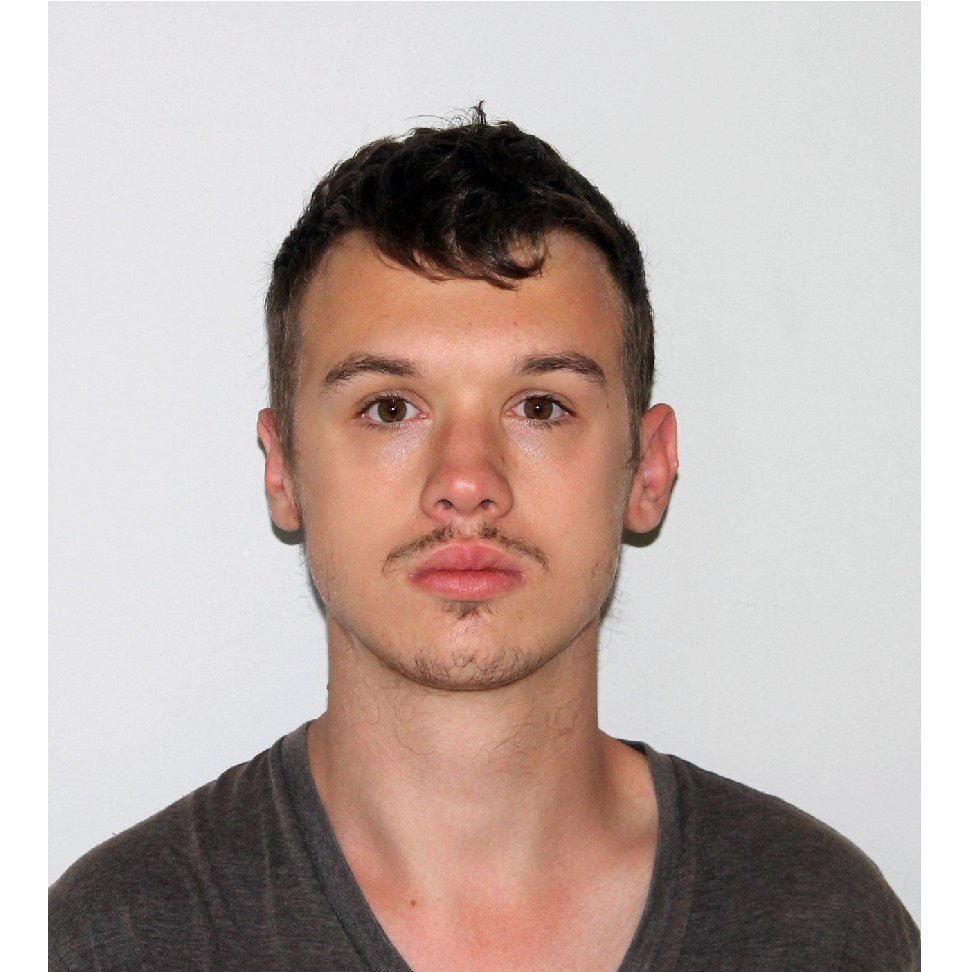
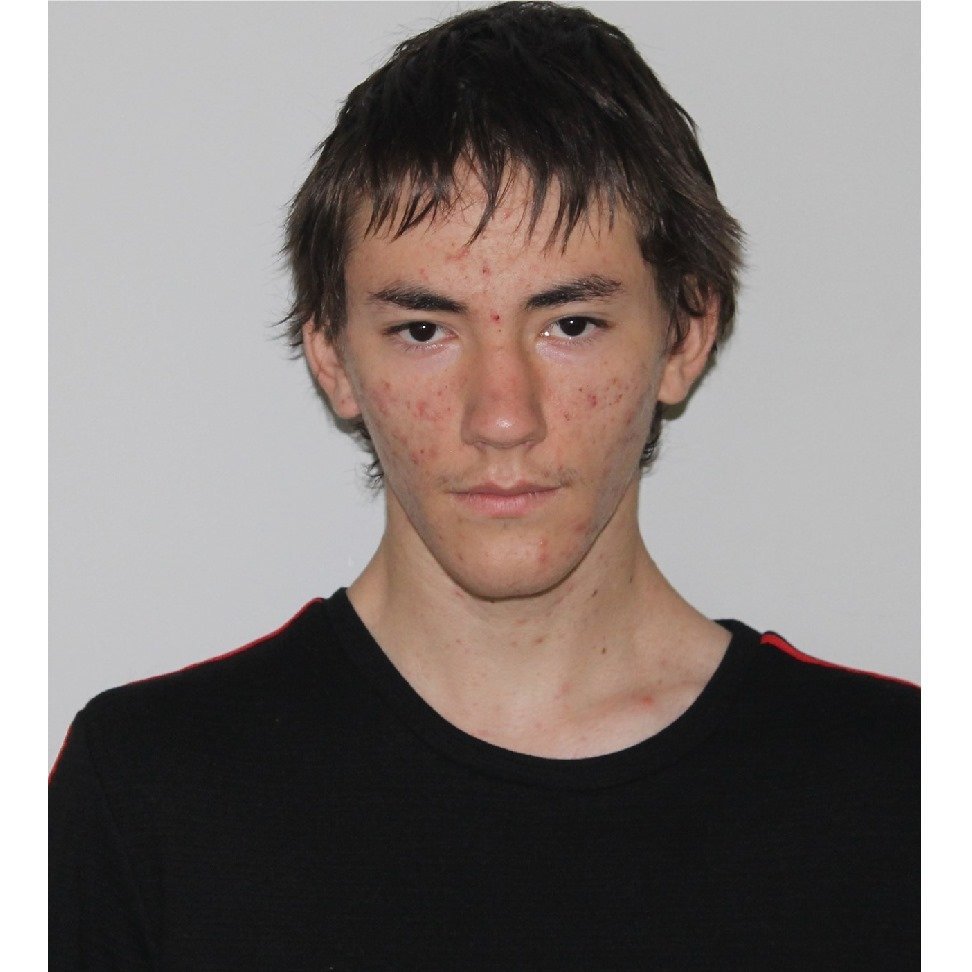
The three suspects are males, all 21 years of age, of which two were already known to the LPD for previous crime-related activities. The two who were arrested were charged with unlicensed possession of firearms.

After being interrogated by the investigators, all the suspects were released, two with conditions to make court appearances, a third without conditions to be followed.

The LPD continues to investigate the incident and had not released any additiona information by earlier this week.

Laval man killed after getting out of a vehicle on A-15

A 20-year-old man died early last Sunday morning when he was struck by a car moments after stepping out of his vehicle on the side of Autoroute 15 in Laval.

The Laval Police Department said the man had gotten out of the vehicle to relieve himself on the side of the highway near the edge of a ramp on the A-15 around 4:50 a.m.

According to LPD community relations officer Stéphanie Beshara, the victim got out on the traffic side of the car, instead of on the passenger side which is safer.

At this point he was struck by an oncoming vehicle. After the arrival of police and ambulance personnel, he was was pronounced dead at the scene.

The driver of the parked vehicle, who was said to be a friend of the victim, was taken to hospital to be treated for nervous shock.

Although officers from the LPD interviewed the driver of the other vehicle, no charges were expected and alcohol or excessive speed were ruled out as factors in the accident.

According to Beshara, what ended up as a tragic road accident had started out as a joke between the victim and the driver of the vehicle he was riding in. She said the victim had gone out towards the centre of the roadway, joking about being hit, when that is exactly what happened.

The oncoming vehicle that hit him tried at the last moment to swerve out of the way, but ended up crashing into a concrete barrier a few metres further instead. Two women in their 20s in that vehicle were not injured.

Road safety experts recommend that when it is absolutely necessary to stop a vehicle on the side of an autoroute or high-speed highway, one should try as much as possible to drive the vehicle off the roadway as much as possible, past the shoulder and onto an unpaved and grassed-over area when one is available.

A woman was allegedly stabbed by her husband in Laval

A 30-year-old man allegedly tried to kill his wife by stabbing her in the neck, in a residence in the Sainte-Rose neighbourhood of Laval.

The events occurred last Friday October 15 around 1:20 p.m., on Laguerrier Street, not far from the intersection of Sainte-Rose Boulevard.

When police arrived at the scene, they found the 31-year-old woman with a serious stab wound to the neck. She was taken to hospital for serious injuries that would not be life-threatening.

As for her husband, he was arrested at the scene, but also had to be taken to the hospital after inflicting injuries on himself. The arrested suspect could face a charge of attempted murder.

Poissant’s ‘Laval Citoyens’ pledges to build a 12,000-square metre skatepark

Estimated $5 million facility would be located next to Laval Senior Academy

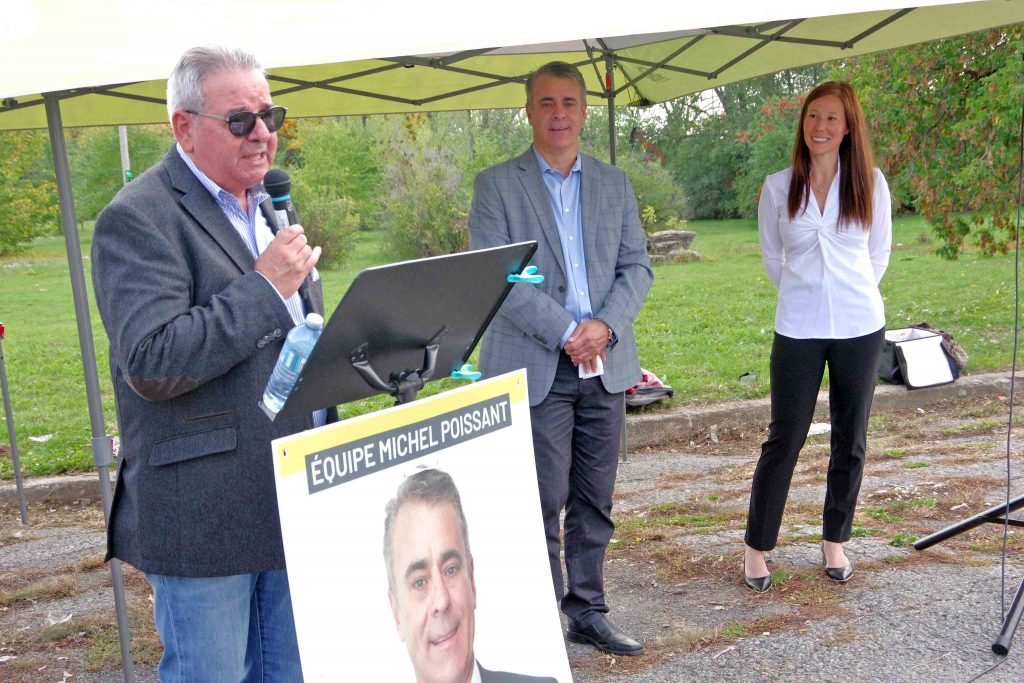
In the hopes perhaps of building up voter support in Laval’s central and western districts, mayoralty candidate Michel Poissant’s Laval Citoyens party is pledging to build a new skatepark on land owned by the City of Laval on Souvenir Boulevard just east of Laval Senior Academy.

Noting that skateboarding is now a competitive Summer Olympic Games sporting event, the party says that during the 2020 Tokyo games, they had noted that increasing numbers of girls, boys, men and women were participating actively in the sport.

Would cost $5 million

The proposed skatepark would be 12,000 square metres in size and cost around $5 million. Its design would be based on skatepark concepts produced by the University du Quèbec à Trois-Rivières (UQTR) in 2005, in conjunction with the Association québécoise du loisir municipal and other experts and the Quebec Ministry of Sports and Leisure.

From the left, Laval Citoyens supporter Georges Pelletier introduces mayoralty candidate Michel Poissant and Souvenir-Labelle candidate Lyne Potvin during the party’s announcement last week of a pledge to build a new skatepark if elected on Nov. 7. (Photo: Martin C. Barry, Newsfirst Multimedia)

“Laval Citoyens is proud to present this major project for our youths, because it is important to offer them sports, leisure and arts infrastructures that allow them to channel their energy in a healthy way while using facilities created for them, but while seeing that our youths aren’t exposed to bad influences,” the party said in a statement.

Near Laval Senior Academy

During a press conference held last week in a parking lot next to Laval Senior Academy, Poissant said it was Laval Citoyens’ hope that the facility’s principal users would be LSA students. “I hope that we’re going to get some students from just close by,” he said, while adding “It’s one of the reasons why it’s here.”

If built (conditional on Laval Citoyens becoming the next administration at Laval city hall), the skatepark would probably be the largest such facility in Quebec, according to Poissant. “However, with the size of our city, it will allow our youth to come on out and have some fun,” he added, noting the steadily rising popularity of skateboarding and similar sports.

A strategic location

Regarding the cost, Poissant said the city would seek subsidies from the provincial and federal governments to help pay the bill. As for the location, he said it was important to choose a place at a considerable distance from residences, as well as near public transit since most of the users will probably be youths who don’t have full and easy access to car transportation.

The proposed skatepark would be 12,000 square metres in size and cost around $5 million

“The location is good,” said Poissant. “And we won’t need to purchase the land. As you may know, land is very expensive in Laval. This will help to minimize the size of the investment, while optimizing the usage of a piece of land that is already owned by the city. It’s a truly great project.”

Growing in popularity

According to Lyne Potvin, the Laval Citoyens candidate in the district of Souvenir-Labelle, there are now more than 500 publicly-supported skatepark facilities across Canada, while in the U.S. there are more than 2,800. Citing statistical information, she maintained that comparable numbers of people are now pursuing skateboarding, compared to baseball and volleyball which also remain popular.

Regarding skateboarding-related injuries, she said that only 12 per cent of injuries are reported to have taken place in skateparks, and most injuries happen where skateboarding is practiced on the street or in a similarly unregulated environment, said Potvin.

An improvised skatepark

While there are currently several smaller-scale skateparks located in neighbourhoods in various parts of Laval, including a skatepark in Laval-Ouest, Laval Citoyens believes the city needs a large and more comprehensive skateboarding facility.

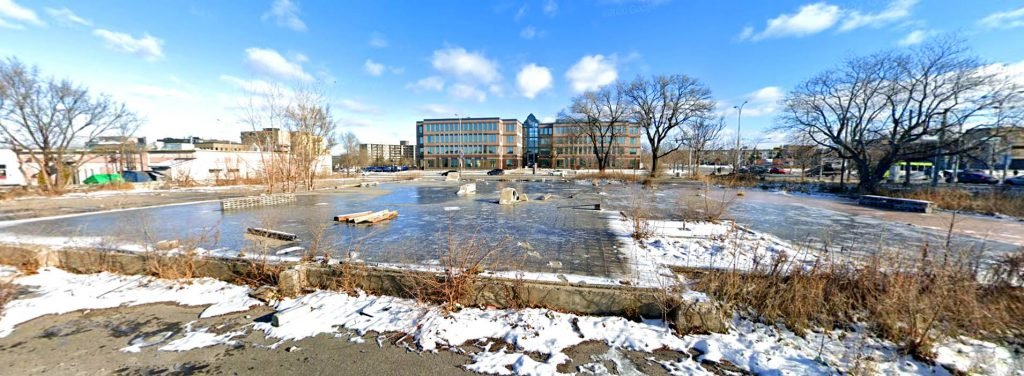
Skateboarding fans from Chomedey have set up an improvised skatepark in this vacant lot at the corner of Chomdey Blvd. and Souvenir Rd.

Laval Citoyens party officials noted that some skateboarding enthusiasts from Chomedey set up an improvised skatepark in a vacant lot at the corner of Chomedey Blvd. and Souvenir Rd. They suggested that that this clearly shows there is a demand in Laval for a professionally-constructed skateboard park.

Laval signs agreement to support ‘digital shift’ by retailers

Last week, the City of Laval became the first municipality in Quebec to sign a strategic partnership agreement with the Association québécoise des technologies (AQT) for a program that will provide support to 5,000 retailers across the province that are shifting their business into digital mode.

In Laval, 250 business owners will be participating. The program will initiate them into some of the basic fundamentals of online retail operation and how to optimize business.

In addition to the program, $112,500 in subsidies are also being provided to the Laval business owners to lower the cost of participating. The subsidy will provide each business with $250 to reduce the $750 cost of taking part.

As part of the program, four hours of coaching at the École des entrepreneurs du Québec will be provided, as well as 10 hours of individual counselling by a specialist. The program participants will also be provided access to an online platform for additional training and perks.

“This financial assistance, which is part of the city’s economic re-launch plan, supports a sector that was badly impacted by the pandemic,” said Laval deputy-mayor and executive-committee vice-president Stéphane Boyer who is responsible for economic development dossiers.

“Around 25,400 persons work in the retail sector, which is around 16 per cent of jobs in Laval,” he added. “It is therefore important for Laval to support digital shift projects in order to stimulate growth while ensuring prosperity in this industry.”

To be eligible for the program, retail business operators from Laval must have at least 100 employees and a maximum of four retail outlets here. Those interested can call the City of Laval’s economic development department at 450 978-5959, or send an e-mail to lavaleconomique@laval.ca.

Third Festival NUM is geared to ‘techno addicts’

The design of robots, software coding and computer programming are among the many topics that will be dealt with during the 3rd Festival NUM, which will be presented from Oct. 29 to Nov. 7 by the City of Laval’s public libraries.

This annual event is growing more popular with youths and their parents every year. This year, up to 20 activities are planned, bringing together technology and the arts. The events will be taking place mostly in virtual format over the library’s YouTube and Zoom channels (the latter requiring pre-registration). There will also be some in-person content.

This year’s Festival NUM is bringing parents into the action. They will be able to take part in a presentation on how their children are using social media.

At the multicultural library, parents with their children will also be able to view a short presentation based on virtual reality, showing the library from various angles. And they will be able to have fun playing an online escape game that presents clues for puzzles to be solved.

This is the third year for the Festival NUM. The festival focuses especially on children coming from disadvantaged homes, encouraging them to use their imaginations and learn about computer and digital technology.

This Post Pandemic Will Be Costly

A grocery store owner tells me he usually sees food prices increase by 1 to 3%, and usually in January. Now it can happen at any time and the margin of increase is no longer what it use to be. Today, it is anywhere from 3 to 7% and sometimes, even reaches 10% overnight, for the same product. To avoid these higher costs, popular brands will often revert to ‘shrinkflation’, the process of reducing the size of the product for the same price, and sometimes keeping the same size but lowering the quality. Add to those cost increases, a strong inflation front, now at 4.1%. It’s a formula for financial pain, and a change in the choice of food for many of us.

This pandemic has led us to “weird economic outcomes” writes the Economist. You have heard of challenging supply chains by ships loaded with goods lined up for miles in harbours. That backlog at ports around the world is causing shipping delays and price hikes for consumer goods. The ships, fully loaded with containers, are waiting to drop anchor at their designated dock because longshoremen can not keep up with the sudden surge of post pandemic demand for an array of consumer products, from Chardonnay to a new Subaru.

In England, Boris Johnson told the British there will be empty shelves at Christmas.

Then there is this unbelievable labour shortage, despite a 7% unemployment rate. It has “exacerbated global supply chain strains”. One air conditioning company is so back logged because of a shortage of employees, it’s still installing AC units in October, and expects to be doing so until Christmas. And friends who lined up for their West Jet boarding pass, were told at the moment they reached the counter, that their flight had been cancelled because there was an insufficient number of on board staff as required by law. Delta recently said it had to cancel 100 flights. And a Florida café now uses a robot to greet customers and deliver to the tables.

Newsfirst columnist Robert Vairo says the pandemic recovery will be long and hard.

We are facing an acute shortage of, well everybody, from truckers, butchers, warehouse workers, to hospitality, restaurant not to mention demoralized health care workers, and those quitting. A stop to federal government handouts, lower Covid hospital admissions, and more consistent government restrictions, will slowly resolve many of these issues. But industry leaders say it will take time, certainly well into 2022, perhaps even 2023.

There is an ongoing debate over whether countries have moved towards renewable energy too quickly. If you were around in the mid-seventies, you were part of our first energy crisis. Suddenly everything, not only electricity, gas, oil, and coal, but everything, led to a spectacular rise in inflation reaching 10%, and mortgage rates at 14%. No one is suggesting history will repeat itself, hopefully not with those numbers. But there are changing patterns in our use of energy, and we should be careful if we think we can suddenly abandon oil and gas. China is burning more coal than ever, and buying from anyone, including Canada (the port of Vancouver is the largest exporter of coal in North America) Don’t ever let a BC resident tell you they are the most disciplined environmentalists. They are not. Thanks to Norway, Europe’s second biggest gas supplier, smartly extracting as much natural resources as possible, (unlike Canada) is registering a constant trade surplus by supplying natural gas to Europeans, who would otherwise be at the whim of Russia for its winter heating. And who is selling more LNG (liquified natural gas) to the world? It could have been Canada exporting $billions yearly, but it’s the United States, whose so called environmental groups have forced Canada to keep its resources in the ground. Meanwhile the price of coal, gas and oil have increased almost 100%, since the month of May. Who says oil and gas are dead? Not for decades. Oil analysts say the world will continue to consume nonrenewable energy past 2050, when world leaders (including our Prime Minister) optimistically, and frankly unrealistically, predict totally green energy use. It’s our “first green energy shock of the green era”.

Quick note. Justin Trudeau promised “all civil servants will have to be vaccinated by October 31st, or else” during the recent campaign. The reality is there is no longer a deadline, and those who don’t wish to be vaccinated will not be fired but subjected to frequent tests. Hmm, sounds a lot like the same policy issued by Conservative Erin O’Toole during the campaign. Surprised? I am not, and neither are the 67.4% of Canadians who did not vote for him.

Final note. Well wishes to one of my very favourites, Ginette Reno. Get well soon Madame. We need you back at the Bell Center.

That’s what I’m Thinking.

Robert Vairo

robert@newsfirst.ca

The Conseil des Lavalloises advocates for the advancement of Laval women in various sectors of Québec’s third largest city

0
Women council

“It is with great HONOUR That I am on the ADVISORY BOARD of 13 LAVAL WOMEN dedicated to bring EQUALITY to the CITY OF LAVAL for women, promote the active participation in public life of Laval women and ensure that their needs and realities are taken into account by the actions of the municipality. All 13 women have different backgrounds, both personally and professionally.”

This statement, contained in a document sent to The Laval News by Patricia Lagopatis,  describes in large part the mission of the CONSEIL des LAVALLOISES.

The members of the group are Myriam Fillion, President, Antonine Boily, Patricia Collin, Marsha Conserve, Christiane Cyrille, Santina Di Pasquale, Leonore Duarte, Marie-Ève Labranche, Patricia Lagopatis, Cecilia Macedo, Sylvie Moreau, Annie-Josiane Sessou, Marie-Andrée Ulysse. Nicole Caron, is Past President.

The documentation received by TLN from Patricial Lagopatis, also provided the following information reprinted in its entirety in the interest of accuracy and context:

The CONSEIL des LAVALLOISES was created in a collaborative effort between the City and women-led organizations, particularly, the Table de concertation de Laval en condition femmes (TCLCF) and the Centre de femmes de Laval. For years, the TCLCF  aspired to create an advisory board within Laval to advise the municipal administration on issues of equality between women and men. The TCLCF brought forth this demand for the creation of an ad-hoc committee which was deposited On July 4, 2017, by the elected Mrs. Virginie Dufour and Mrs. Aglaia Revelakis.

On March 13, 2018, this ad hoc committee submitted to the Municipal Council a report recommending the creation of an advisory board, the Conseil des Lavalloises, On March 12, 2019 the Municipal Council approved the creation of the Conseil des Lavalloises. The thirteen independent members of the Conseil des Lavalloises were appointed by a rigorous recruitment process led by the Governance Secretariat, in accordance with the framework policy on governance policy of the City of Laval.

For more information: https//www.laval.ca/Pages/Fr/A-propos/conseil-lavalloises.aspx

The mandate

  The Council of Laval Women’s mandate is to promote active participation in public life of Laval women in all their diversity and to ensure that the needs and realities of women are taken into account by the actions of the municipality. That is:

• Submit opinions/recommendations to the executive committee on issues relating to gender-equality and the status of women.

• Ensure that municipal services are appropriate and accessible to women

• Comment on working conditions and access to employment equity and professional advancement for women

• Ensure that mechanisms/conditions for citizen-participation are established to promote better representation of women in politics.

The Conseil is made up of 13 non-elected citizens of Laval, representing the diversity of Laval women and their realities.

You can reach the Conseil des Lavalloises by email at conseildeslavalloises@laval.ca

NOTE TO READERS: The preceding is the final draft of the report on the Conseil des Lavalloises that should have been published in the Laval News issue of October 13, 2021 on page. The previous report published on that date was only a working draft and should not have been put into print. TLN regrets any inconvenience the first report may have caused the Conseil des Lavalloises, the City of Laval, and all individuals and organizations mentioned in the article. As well, please note that Patricia Lagopatis was incorrectly identified, in the first report, as the group’s spokesperson. She is not the spokesperson, she is fact, a member of the board of the Conseil des Lavalloises.

Laval News Volume 29-36

0

The current issue of the Laval News volume 29-36 published October 20th, 2021.
Covering Laval local news, politics, sports and our new section Mature Life.
(Click on the image to read the paper.)

Front page of the Laval News.
Front page of the Laval News, October 20th, 2021 issue.

Supply and demand are driving up home prices, says real estate sales expert

Royal LePage stats show Laval, North Shore prices up 13.7 and 21 % respectively

The Royal LePage House Price Survey and Market Survey Forecast released last week revealed signs of a shift to a healthier real estate market for the first time since the onset of the pandemic early last year.

But at the same time, sales figures for the Laval and North Shore regions showed property sales prices steadily going up. As the number of available properties declined, demand remained constant, thus fueling price increases.

According to the survey, aggregate home prices in Laval rose 13.7 per cent from Q3 2020 to Q3 2021 (1 July- 30 Sept.). Aggregate homes prices in the North Shore region went up 21 per cent during the same period.

Supply and demand

“Demand for Montreal’s suburbs continued to grow significantly in the third quarter, which explains the upward pressure we are seeing on home prices in Laval,” Georges Gaucher, manager of Royal LePage Village in Montreal, said in an e-mailed response to questions from Newsfirst Multimedia.

Royal LePage Village’s Georges Gaucher.

“Inventory of homes for sale remains at record lows in the region, pushing home price appreciation further,” he added, while noting that Laval’s real estate is catching up on price appreciation.

“Before the pandemic, the rate of home price appreciation in Laval was more moderate, falling behind many Montreal neighbourhoods,” he continued. “Over the last few months, the North Shore of Montreal and Laval have been among the most in demand areas for residential properties, and consequently where property prices increased the most.”

A countrywide trend

According to the report, Canada’s national aggregate home price increased 21.4 per cent year-over-year in the third quarter. Royal LePage predicts that the national aggregate home price will rise 16 per cent in Q4 2021.

If that forecast is reached, the aggregate price of a home in Canada will have increased 33 per cent by year’s end and since the start of the real estate recovery in June of 2020.

As anticipated in the second quarter, the summer market gave way to a slowdown in activity and price increases in several sectors. The survey said the aggregate price of a property increased 20.8 per cent year-over-year to $517,200.

Signs of a slowdown

The median price of a single-family detached house rose 20.0 per cent to $571,400, while the median price of a condominium rose 12.2 per cent to $410,400 in the third quarter of 2021. The pricing data includes both resale and new construction properties.

‘Demand for Montreal’s suburbs continued to grow significantly in the third quarter, which explains the upward pressure we are seeing on home prices in Laval’

“Signs of a slowdown that we had anticipated were confirmed during the third quarter,” said Dominic St-Pierre, vice-president and general manager of Royal LePage in Quebec. “Quarter-to-quarter price changes have fallen to their lowest rate since the start of the pandemic, below one percent, whereas the increases of the previous quarters had varied between 5 and 10 per cent.”

In terms of sales, St-Pierre said single-family home transactions in the Greater Montreal Area were down 37.2 per cent in the third quarter of 2021 compared to the third quarter of 2020, while condominium sales fell 22.3 per cent over the same period.

Royal LePage House Price Survey Data
Greater Montreal Area – Third Quarter 2021

Single-family detached house
RegionMedian PriceQ3 2021Q3 2021 – Q2 2021 Change (%)Q3 2021 – Q3 2020 Change (%)
Montreal Centre$1,060,5001.0%19.2%
Montreal East$546,5004.3%15.0%
Montreal West$742,2000.6%15.7%
Laval$531,4001.2%17.7%
Montreal North Shore$430,0001.8%23.0%
Montreal South Shore$522,7001.3%21.4%
Greater Montreal$571,4002.2%20.0%
Condominium
RegionMedian PriceQ3 2021Q3 2021 – Q2 2021 Change (%)Q3 2021 – Q3 2020 Change (%)
Montreal Centre$502,2000.3%8.8%
Montreal East$425,0000.0%8.3%
Montreal West$410,4002.6%14.8%
Laval$338,5000.3%14.4%
Montreal North Shore$307,9003.9%27.7%
Montreal South Shore$330,900-1.2%15.3%
Greater Montreal$410,4001.3%12.2%
Aggregate
RegionMedian PriceQ3 2021Q3 2021 – Q2 2021 Change (%)Q3 2021 – Q3 2020 Change (%)
Montreal Centre$648,7000.9%12.5%
Montreal East$499,700-1.0%9.2%
Montreal West$652,5003.1%14.5%
Laval$468,8000.8%13.7%
Montreal North Shore$426,8002.5%21.0%
Montreal South Shore$489,9002.5%17.8%
Greater Montreal$517,2000.6%20.8%

Two arrested following Dagenais Blvd. fires

Two young men were arrested last week following multiple fires set on Dagenais Blvd. in Laval in late September, including one at a Buddhist temple that broke out while Buddhist clergy were inside.

The Laval Police Department confirmed in a news release that officers arrested Jacob Côté, 18, and Mathieu Mongeau, 21, after there had been five fires on Dagenais Blvd. in Fabreville on Sept. 28.

“A call was made to 9-1-1 concerning a fire that was raging inside a garbage container in the parking lot of a business located on Dagenais Blvd. West,” the LPD said. “Four other fires were declared simultaneously in the Fabreville sector.”

According to the LPD’s investigation, the officers were able to quickly catch up to Côté and Mongeau, arresting them on the same night as the fires, because they were lingering a short distance away.

The two were arraigned on Sept. 29 on charges of arson. They remained detained at that time and were due back in court a week later.

Man, 25, shot on Montée Monette in Vimont

There was yet another firearms incident on Laval’s territory last week. This time, a 25-year-old male received a gunshot wound on Oct. 8 as he was driving on Montée Monette in Vimont.

Just after 9:30 pm near the corner of Yvan Pavlov Blvd., another car came up alongside the victim’s vehicle and a gunman began firing in his direction. While the victim sustained a gunshot injury, a passenger riding beside him was not hurt, the police said in an incident report.

The LPD said the victim was not known to them. He was taken to a nearby hospital to be treated, and his injuries were not life-threatening. The LPD had no suspects.

Work to begin at A-15/A-440 interchange, two years after fiery crash

Work on the first phase of a project to make the Autoroute 440/Autoroute 15 interchange safer after years of vehicle accidents was set to begin this week.

The Quebec Ministry of Transport had announced the project after the fiery multi-vehicle accident that took place in early August 2019. Four people lost their lives and a dozen others were injured in a nine-vehicle pile-up that included two heavy trucks.

The first phase of the work will involve adding an entrance south of the A-440 overpass from the A-15 northbound service roads. This phase is expected to limit backed up traffic and improve flow through the interchange.

The Autorité régionale de transport métropolitain (ARTM) is supervising the project. This is being done in order to connect this work to a project for reserved lanes on the A-15 headed northward. The two projects are expected to be completed by next summer.

A second phase includes the construction of an overhead ramp leading directly from the A-440 West express lanes to the A-15 North, including redevelopment of the Industriel Blvd. exit.

The Quebec government has prioritized the project and is using acceleration measures provided in provincial legislation for accelerating certain infrastructure projects. Around 305,000 vehicles travel every day through the A-440/A-15 interchange.

Pandemic impacted economic development of English communities in Quebec

Ottawa, Quebec failed to halt Anglo community’s economic decline, says CEDEC

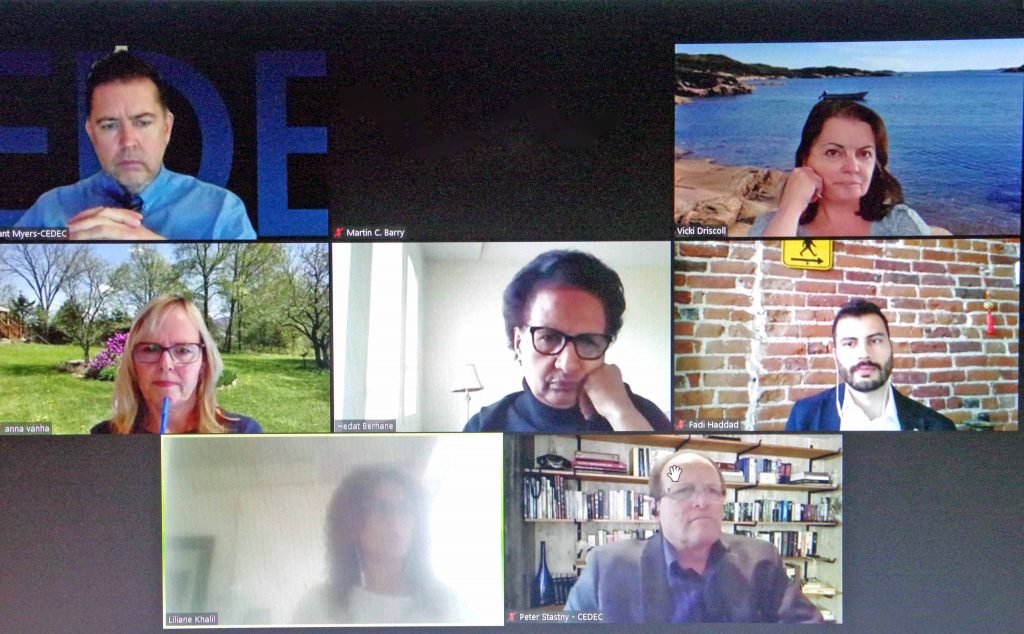
There was a collective failure on the part of federal and provincial governments to prioritize and take the necessary steps to address the economic decline of the English-speaking community of Quebec, the head of an economic development agency with concerns for the province’s anglophones claimed during an online consultation on Oct. 5.

“In the context of post-pandemic recovery, addressing this challenge must be at the centre of any constructive and productive dialogue with federal institutions with the responsibility for the economic development of the English-speaking community,” John Buck, president and CEO of the Community Economic Development and Employability Corporation(CEDEC), told federal government officials who hosted the webconference.

Economic vitality

“It is important to emphasize that a community’s health and well-being is a function of its economic vitality,” he added. “The economic development of the English-speaking community, especially in a post-COVID-19 recovery context, must ensure the continued vitality and resilience of the English-speaking community of Quebec in the years ahead.”

CEDEC CEO John Buck said the English-speaking community of Quebec is experiencing economic decline in many quarters.

Buck said the English-speaking community of Quebec is experiencing economic decline in many quarters, examples being economic disadvantages related to employment, poverty, median incomes and a shrinking middle-class. He said that success in being able to deal effectively with these problems will be “essential to the long-term health and vitality of the official language minority community in Quebec.”

‘Ready and willing,’ CEDEC CEO said

In spite of his criticisms, Buck said that effective economic development that will benefit the English-speaking community of Quebec can only be achieved through collaboration and innovation.

“We are ready and willing to work with the federal government and its institutions, especially ISED and CED-Q, to strengthen economic growth and development of the English-speaking community, to develop and adopt a policy on the economic revitalization of the English-speaking community of Quebec in the context of the government’s immediate post-COVID-19 recovery plan, and to extend these efforts into the next official languages action plan.”

Anglo groups consulted

The CEDEC was just one group that Innovation, Science and Economic Development Canada (ISED) and Canada Economic Development for Quebec Region (CED-Q) had invited to participate in the first “Virtual Dialogue Day” with the English-speaking Communities in Quebec (ESCQ).

The purpose of the meeting was to measure the impact of the pandemic on the economic development of the communities, more specifically to reflect on main issues relating to the economic development of the ECSQ in the context of the pandemic, and to build and strengthen collaboration and partnerships between community stakeholders and federal institutions.

New consultation strategy

“This dialogue is a unique occasion for federal departments and partners that brings together English-speaking communities in Quebec and the federal government to reflect on experiences and challenges relating to the pandemic,” said Francis Bilodeau, senior assistant deputy minister for innovation strategies and policies at Innovation, Science and Economic Development Canada.

“These events, this one and other events we’ve launched, support a new consultation strategy put forward by the department,” he said, noting that a second consultation in November will concentrate on the pandemic’s impact on Quebec’s tourism sector, while a third will focus on sharing best practices and collaboration between communities and federal institutions.

Survey results released

Released during the meeting were draft key findings from a pre-consultation survey conducted over a period of 10 days in early September by the Association for Canadian Studies to assess the economic impacts of the pandemic on the English-speaking minority communities in Quebec and whether the federal programs/measures helped to effectively mitigate the impacts.

The purpose of the meeting was to measure the impact of the pandemic on the economic development of the English-speaking community in Quebec.

According to the survey results, 98 per cent of the respondents were from non-profit organizations, the remaining two per cent being from small businesses. The results also showed that nearly one-third of the respondents (29 per cent) used news outlets (local, national and international) as their primary source of information on COVID-19 programs.

More survey findings

In other findings, 80 per cent of respondents said their organization didn’t benefit from COVID-19 economic recovery programs offered by Canada Economic Development (CED), with half saying they had no need for support, and nearly a dozen organizations maintaining they didn’t meet the program criteria.

“The majority of those surveyed (64 per cent) responded that their organization didn’t benefit from any other COVID-19 programs offered by the federal government,” stated the survey’s authors, Paul Holley and Stefan Stefanovic. “According to the majority of the respondents, there was no need for support.”

Anglo ‘Task Force’ brief says Bill 96 ‘deinstitutionalizes the English language’

Among TFLP’s founding members are veterans of the first wave of Bill 101 resistance

While maintaining that they enjoy “a pretty good relationship” with the Quebec Community Groups Network but remain independent of the larger anglophone interest lobby group, the Task Force on Linguistic Policy released a brief on the CAQ government’s Bill 96 last week which goes far beyond the QCGN’s analysis.

Following the federal Liberal government’s enacting of Bill C-32 to reform the Official Languages Act and the provincial government’s passing Bill 96, the TFLP was created “to enable concerned citizens to confront the excesses” in the two pieces of legislation, the organization states on its website.

They weren’t invited

Although the CAQ government recently held public hearings at the National Assembly on Bill 96, the TFLP was not among the few anglophone lobby groups invited to submit briefs. Nonetheless, the organization prepared its own which was released last week during a webcast press conference.

While the QCGN is led by a board that includes former Liberal MP Marlene Jennings as president and former Liberal senator Joan Fraser who is a board member, the TFLP’s list of founding members includes some seasoned veterans of the first wave of resistance to Bill 101 more than four decades ago.

Veterans back to contest

These include former Equality Party leader Keith Henderson, as well as constitional lawyer Brent Tyler, a firebrand who filed many legal contestations of Bill 101 over the years on behalf of companies and individuals who were at odds with the Parti Québécois’ 1977 Bill 101 language legislation.

Both were speakers during last week’s webcast. Ben Huot, vice-chair and policy chair at the TFLP, said the brief was the culmination of an article-by-article analysis of Bill 96 which took place over several months, with university professors, lawyers, professionals and concerned Quebecers participating

Former Equality Party leader Keith Henderson is a founding member of the Task Force on Linguistic Policy.

“Bill 96 is not just a language law, it is a fundamental restructuring of our society, our country, our province (not nation), the relationship between people and the state, and between each other,” said Colin Standish, the Task Force’s president.

TFLP accuses gov’t of lying

“The CAQ government has said repeatedly, ‘This Bill does not take away the rights of English-speakers,’ added Standish. “Those statements are not opinions or biased observations… those statements are lies.”

In an executive summary of its brief on Bill 96, the TFLP says, “The Bill serves to erode, erase and extinguish the fundamental freedoms of all Quebecers, be they French-speakers, English-speakers, newcomers or Aboriginals. The Bill surgically excises the English language and its speakers and institutions from Quebec,” and “in effect, Bill 96 deinstitutionalizes the English language and its speakers in Quebec.”

Pet peeves with Bill 96

Here is a list of the Task Force’s primary reservations about Bill 96:

  • It does not promote, “protect” or increase the French-language in usage, home language, mother-tongue or first official language spoken (FOLS).
  • Bill 96 effectively erases the English-language, its institutions and individual speakers from civil society and public administration in Quebec.
  • The proposed unilateral Constitutional amendment is, in itself, unconstitutional and ill-advised public policy that will affect other aspects of the Canadian Constitution. (s. 159)
  • Changes to the interpretive framework for Bill 101 and the Quebec Charter and other laws will distort fundamental freedoms and human rights. (ss. 63, 65, 66, 120, 138, 133- 136) 5. Freedom of expression, commercial expression and practice, work and employment, contractual liberty and freedom of education are constrained for all Quebecers, of all linguistic groups.
  • The use of provincial and national notwithstanding clauses will suppress basic human rights for all Quebecers in extreme and illegitimate ways at home, at school, the workplace and in their commercial transactions.

Children’s names and Bill 96

Among the more extravagant measures the TFLP claims to have found in Bill 96 is an article which amends the old language legislation by striking out the word “English” in a section pertaining to the naming of a child. This, the TFLP maintains, would force some people to use francicized names.

“Bill 96 is not just a language law, it is a fundamental restructuring of our society,” said TFLP president Colin Standish.

“Where a name contains characters, diacritical signs [accents etc.] or a combination of a character and a diacritical sign that are not used for the writing of French, the name must be transcribed into French,” reads the new article as it would supposedly appear in Bill 96.

“It’s sort of outlandish. If people from around the world or indigenous Canadians, if they have anything that’s sort of not an Anglo/Celtic name, they would be forced to be solely in French going forward,” said Standish.

“It’s a very bizarre little change. I don’t know why we can’t let people name themselves for themselves or what they parents decide.”

Fines from $21,000 – $90,000

Describing some of the monetary penalties imposed upon those who violate Bill 96, the TFLP claims that a fine ranging from $21,000 (individual) to $90,000 (corporate) could be levied upon any person or company found guilty of allowing a child to be instructed in English when they are legally ineligible.

Standish gave the following example (although he suggested he wasn’t completely certain, as the government has yet to explain in detail the exact impact of the law which hasn’t been passed by the National Assembly yet).

Bill 96 and Story Time

“If you let your child in your home read a story book in English to a neighbour’s child, who lacks a Section 23 right – let’s say they’re a new Canadian or a French speaker without the right to English education – you can have a $21,000 fine,” he said, while adding that if you are running a business from home, the fine could be up to $90,000.

‘You could have a $21,000 to $90,000 fine for merely tolerating a child’s receiving instruction in English’

“This is actually in Bill 96. This is not a ridiculous example where I’m trying to distort and pervert what’s actually in the law. You could have a $21,000 to $90,000 fine for merely tolerating a child’s receiving instruction in English if they don’t have a Section 23 right. That’s how far this law goes in perverting and distorting our rights and freedoms.”

Weather

Laval
light rain
7.8 ° C
7.8 °
7.8 °
98 %
3.2kmh
100 %
Mon
14 °
Tue
13 °
Wed
10 °
Thu
11 °
Fri
16 °