Parti Laval proposal supported by mayor’s party passes unanimously
Officials with the City of Laval are thinking of allowing new property owners to spread their payment of the welcome tax over several equal installments and without interest.
A proposal by the Parti Laval, the official opposition at Laval city hall, aimed at offering more flexibility to new homeowners, took a significant step forward during the city council meeting on February 3.

Expected in 2027 budget
Submitted by Parti Laval city councillor Louise Lortie who represents the district of Marc-Aurèle-Fortin, the proposal requesting that the measure be studied by the city’s senior management was unanimously adopted.
However, Lortie accepted an amendment proposed by Mouvement lavallois L’Orée-des-Bois city councillor Yannick Langlois, who is in charge of public finances on the executive committee, to ensure that a due analysis will be carried out “with a view to the 2027 budget year” rather than “as soon as possible.”
“We have been saying this for a long time: when a family or couple buys a house, they already have to deal with the down payment, notary fees, moving costs and sometimes other unforeseen expenses, requiring, on top of that, a single payment of several thousand dollars, while other cities offer more flexibility, it adds unnecessary pressure at an already stressful time for many households,” said Lortie.
A Necessary Measure
Since the easing of a provincial legal framework in 2023, several municipalities have offered more flexible payment options for transfer taxes to reduce the financial burden associated with purchasing a property. Lortie cited the examples of Saint-Jérôme, which now allows payment in two installments, as well as Quebec City, Sainte-Thérèse, Brossard and Salaberry-de-Valleyfield.
In Laval, however, payment is still required in a single lump sum, and the welcome tax rate was recently increased by Mayor Stéphane Boyer’s party, reaching 3 per cent for transactions exceeding $500,000. The Parti Laval sees this rigidity as increasingly difficult to justify and felt it was necessary to introduce a new measure to better support buyers.
More payment flexibility
“In Laval, access to home ownership is becoming increasingly difficult for the middle class,” said Claude Larochelle, the Parti Laval’s leader. “Offering more flexibility in the payment of the welcome tax is a concrete step we have long advocated.
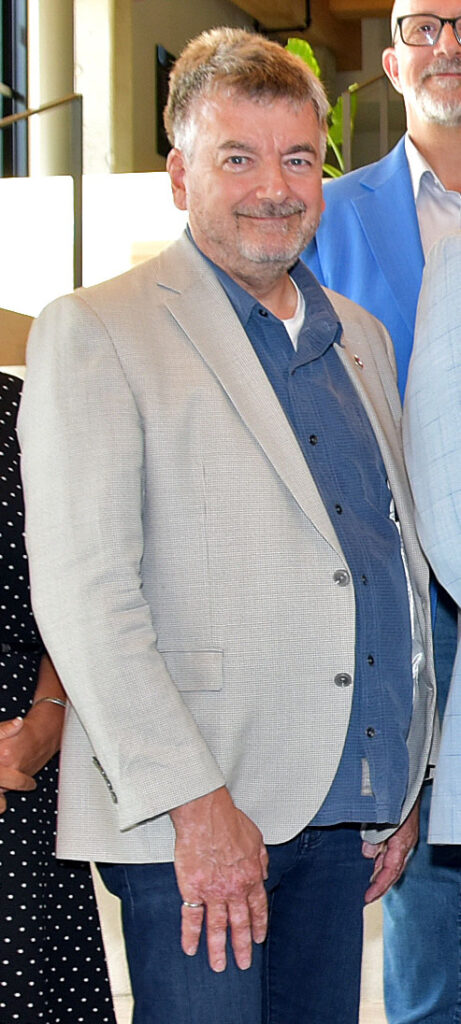
“This measure, included in our platform, is reasonable, effective and already implemented elsewhere,” he added. “It was time we agreed to study it seriously.”
“It’s a simple measure that can make a real difference for those settling in Laval,” said Lortie. “The important thing now is to complete the analysis and deliver concrete solutions to new homeowners.”
The ‘taxe de bienvenue’
While the municipal welcome tax, officially known as the property or real estate transfer tax, was a measure first introduced in Quebec in 1976, the name itself can be misleading.
Although it would seem to suggest municipalities are welcoming new property buyers with a somewhat hefty payment, it actually comes from a French nickname (taxe de bienvenue), which came from a motion in the National Assembly made by Quebec Liberal Party minister Jean Bienvenue.
According to information on real estate transfer rights on the City of Laval’s web site, anyone who buys a property must pay registration fees as stated by provincial law for municipalities. Transfer taxes are payable in a single payment within 30 days of the invoice date.
Transfer tax exemptions
However, in Laval a new property owner can be exempt from transfer tax in certain situations. Cases of exemption:
- Purchase of the property from a direct ascendant or descendant family member. For example, from father to son, or from grandmother to granddaughter. But the exemption does not apply between siblings.
- Purchase of the property from a spouse. The exemption applies to married or cohabiting partners, provided they have lived together for the 12 months preceding the sale.
- Purchase of the property by a legal entity (e.g., a company), at least 90 per cent of whose shares are owned by the seller, who is an individual.