Boyer contends developer wants to minimize expropriations by following autoroutes
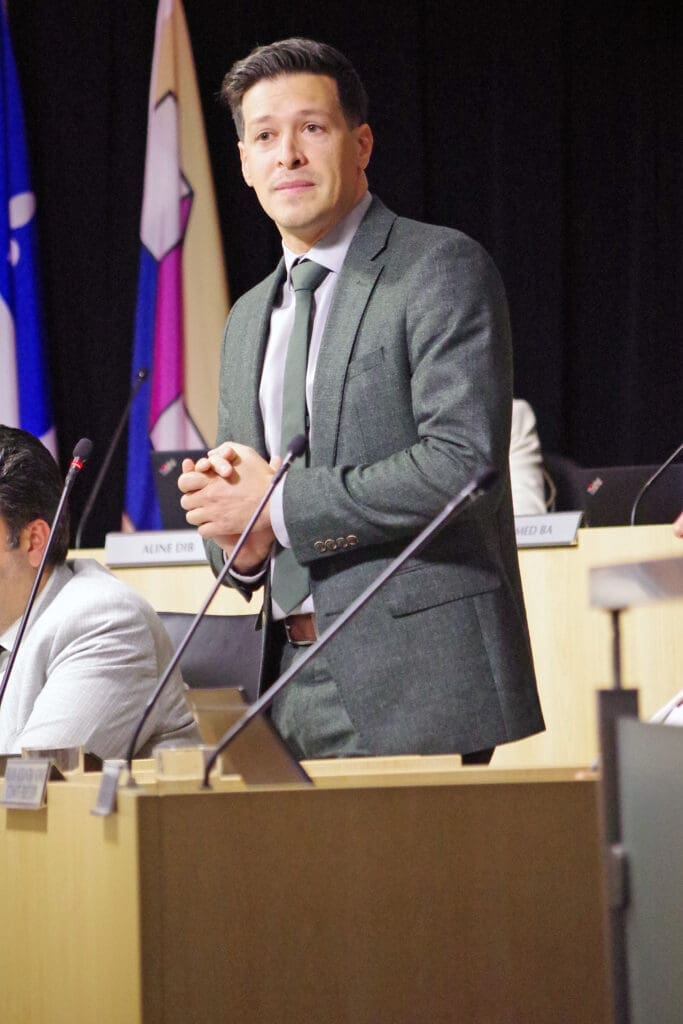
Mayor Stéphane Boyer revealed during the April city council meeting that Alto, the Via Rail subsidiary with a mandate to build Canada’s first high-speed rail network between Toronto and Quebec City with a stop in Laval, is leaning towards using autoroute rights-of-way when mapping out the route – rather than having to expropriate.
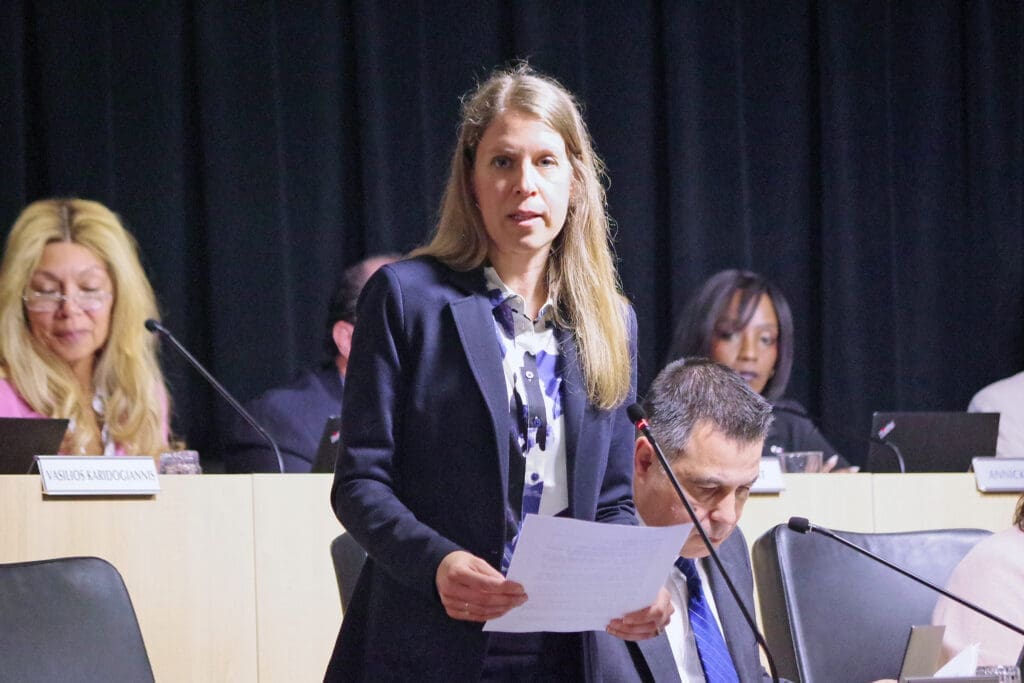
After first raising the issue in March, an outspoken critic of Alto was back at Laval city council earlier this month, challenging Boyer to reveal whether the city was recently asked by Alto to approve a proposed route through Laval as well as the location of a future Alto station.
Resident seeks more info
“As the TGV (high-speed-train) is a very big project which stands to greatly change the territory, why has the city not consulted the citizens of Laval directly regarding the TGV specifically for planning on the territory?” said Pascale Durocher.
“Even if the TGV is a federal project, will the city be putting into place a means to gather information on the concerned Laval residents – a type of register – who are at risk of being expropriated while furnishing them with some kind of assistance?” she continued, specifying that she wasn’t referring to financial assistance.
Replying, Mayor Boyer acknowledged that the City of Laval met some time back with representatives of Alto to lobby for an Alto station in Laval. “I believed that if the railway were to be passing over our territory, that we should at least have a station the residents of Laval would be able to use,” he said.
‘We appear to have been heard,’ said Boyer
Boyer suggested he was probably not the only person who was surprised that the federal government (which owns Via Rail) decided to seriously consider Laval for an Alto station, since it was assumed at one time that only the City of Montreal would be getting a station.
“So, I am happy to see that at least we appear to have been heard on this,” he continued. “I think there are a lot of other people who were surprised to see that the government decided to make a station in Laval.”
Following up on a claim Durocher made at the March council meeting, the mayor acknowledged that the City of Laval’s mobility office had conducted numerous surveys and studies over the years on Laval’s transportation and mobility systems – although none were done specifically on the Alto project, he added.
“But all to say that I would like to reassure the citizens that Alto, when I met with them, made it very clear to me that what they want to do in Laval is mostly to use autoroute rights-of-way in order to minimize as much as possible eventual expropriations, so that the eventual impact should be considerably limited,” said the mayor.
Alto’s potential impact in Laval east
Action Laval opposition city councillor for Saint-François Isabelle Piché said she would be tabling a notice of motion for council to make a declaration on the impact the Alto rail line may end up having on the permanent agricultural zone established by the city in the east end of Île Jésus.
The declaration stated in part “our desire to keep this zone intact.”
While Parti Laval opposition councillor for Marc-Aurèle-Fortin Louise Lortie said the Alto project “represents an important issue for our city,” she added that “it’s completely normal that a project of this size generates preoccupations.”
She said she had been receiving calls lately from residents who were curious and seeking additional information on the project. According to Lortie, “there are people with the city who are working on this project along with people from Alto.”
Armenian Genocide Remembrance
During a period of the meeting for councillors’ statements, two city councillors drew attention to the fact that Armenians throughout the world would be marking Armenian Genocide Remembrance Day on April 24.
“Starting in 1915, the Armenians were forced to leave their homes and endured long forced marches,” said Chomedey city councillor Aglaia Revelakis. “Let us put an end to all the wars in the world and give peace a chance,” she added.
Renaud-Coursol city councillor Seta Topouzian (who is of Armenian heritage) also noted the anniversary. “This recollection is a part of my history and that of numerous Armenian families from Laval,” she said. “We take this moment to reflect and honor the memory of the victims of this tragedy that profoundly marked the history of the Armenian people.”
Future of Richard Trottier Arena
After a series of inquiries during question period from several Fabreville residents regarding the impending demolition of the Richard Trottier Arena, which has been closed since 2018, Pont-Viau councillor Christine Poirier (who is responsible for economic development on the executive-committee) responded.
“Unfortunately, it won’t be possible to renovate it to make a new arena,” she said. While noting that a planned demolition has been postponed until the city is able to evaluate the full extent of reaction from residents, Poirier said city officials will be taking their time before making a final decision on the arena’s fate.